


Zygorhiza Whale Molar Fossil Replica
$30.00
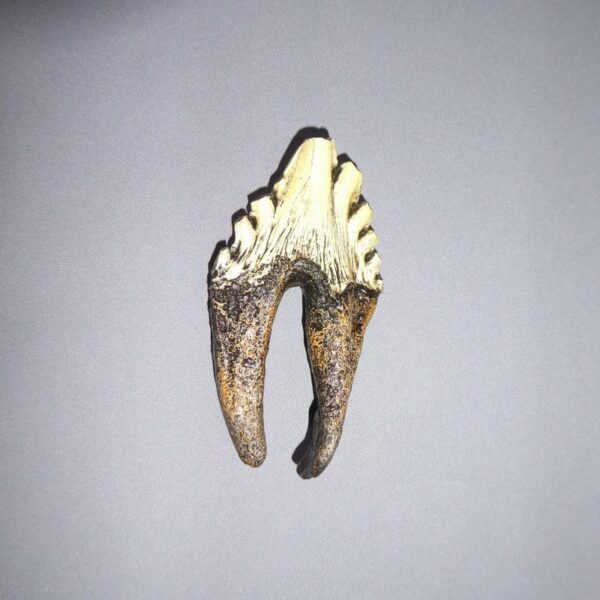
The Zygorhiza whale molar tooth replica features the jagged, double-rooted cheek teeth that prehistoric hunters used to slice through ancient fish.
- Description
- Additional information
Description
Zygorhiza whale molar fossil replica measures 4.1 x 2.5 x 1.0 inches. The Zygorhiza molar tooth is museum-quality polyurethane cast resin cast of original specimen. 1:1 scale. Made in USA.
The Zygorhiza kochii was a sleek, early whale that lived roughly 34 to 38 million years ago and likely moved through the water with a mix of an eel-like wiggle and tail-driven power. This smaller whale had a robust neck that allowed it to turn its head independently of its body.
Its skull was about two feet long and housed a brain that was relatively large for its time, suggesting it was a highly capable hunter. Because its front limbs still functioned as flexible paddles with movable elbow joints, paleontologists view it as a critical missing link between land mammals and today’s ocean-bound giants.
Scientific Classification
- Kingdom: Animalia
- Phylum: Chordata
- Class: Mammalia
- Order: Artiodactyla
- Infraorder: Cetacea
- Family: †Basilosauridae
- Subfamily: †Dorudontinae
- Genus: †Zygorhiza
- Species: †Z. kochii
- Binomial name: †Zygorhiza kochii
- Conservation status: Extinct
The Zygorhiza whale molar fossil replica puts the jagged shearing surfaces of a prehistoric hunter. You can diversify your case by adding the Zygorhiza whale canine tooth replica.
To see how much marine predators changed over millions of years, try paring these with the Cuvier’s beaked whale canine tooth pair replicas.
Round out your collection with the Hubb’s beaked whale tooth replicas to create a museum-quality exhibit. This grouping reveals the massive transition from the tooth-filled jaws of the Eocene to the suction-feeding modern whales of today.
Additional information
| Weight | 2.0 lbs |
|---|---|
| Dimensions | 4.1 × 2.5 × 1.0 in |
| World Whale Day - 3rd Sunday of February | World Whale Day is celebrated on the third Sunday of February each year to recognize whales and raise awareness of the threats they face. The day began in Maui, Hawaii in 1980 to honor the humpback whales that migrate to the islands each winter to give birth. The Pacific Whale Foundation organizes events that include parades, activities for children, and fun characters. |


