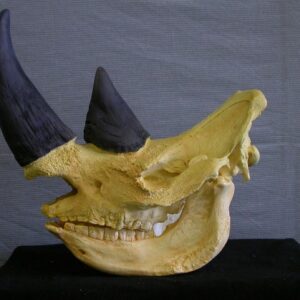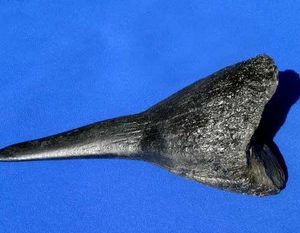

Black Rhinoceros Female Single-Horn Replica
$137.00
Black rhinoceros female single-horn replica measures 13.0 inches. The Diceros bicornis horn is a museum-quality polyurethane resin cast of a CAS specimen.
- Description
- Additional information
Description
Black rhinoceros female single-horn replica measures 13.0 inches. The Diceros bicornis horn is a museum-quality polyurethane resin cast of a California Academy of Sciences specimen. 1:1 scale. Made in USA.
The black rhinoceros is a species of rhinoceros, native to eastern and southern Africa including Botswana, Kenya, Malawi, Mozambique, Namibia, South Africa, Eswatini, Tanzania, Zambia, and Zimbabwe. Although people refer to the rhinoceros as black, its colors vary from brown to grey.
Its smaller size, compact skull, and unique ears instantly distinguish the black rhinoceros from the rhinoceros. The black rhinoceros carries naturally carries its head much higher than the white rhinoceros.
Scientific Classification
- Kingdom: Animalia
- Phylum: Chordata
- Class: Mammalia
- Order: Perissodactyla
- Family: Rhinocerotidae
- Genus: Diceros
- Species: D. bicornis
- Binomial name: Diceros bicornis
- Conservation status: Critically Endangered
Becka, the black rhinoceros female single-horn replica, are going on a picnic. They have their picnic basket full of food and refreshments all packed up and ready to go.
Night, the black rhinoceros male skull replica, is planning on meeting them at the Big Rock meadow.
Blanco, the white rhinoceros skull replica, got an early start and is already at the meadow with her kids.
Fluffy, the woolly rhinoceros skull replica, is still at home combing his fur.
Additional information
| Weight | 6.5 lbs |
|---|---|
| Dimensions | 13.0 in |
| World Rhino Day - September 22nd | World Rhino Day is celebrated on September 22nd each year to raise awareness and funds for the five rhino species: black, white, greater one-horned, Sumatran, and Javan. The day brings together zoos, NGOs, rhino sanctuaries, and concerned citizens from around the world to highlight the threats facing rhinos, such as poaching, habitat loss, disease, and natural disasters. |