
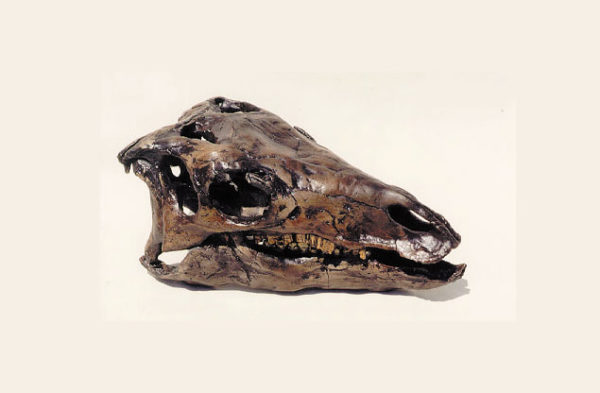


Camptosaurus Dinosaur Skull Replica
$454.00
These specimens reached heights of seven feet at the hips, and researchers believe their dense tails balanced their massive bodies during locomotion.
- Description
- Additional information
Description
Camptosaurus dinosaur skull replica measures 14.0 x 5.0 x 6.0 inches. Camptonotus dispar skull is museum-quality polyurethane resin cast. 2-part skull (seperate crainum and mandible). 1:2 scale. Made in USA.
The large herbivorous Camptosaurus lived in Western Europe and North American from the Late Jurassic to the Early Cretaceous.
Museum curator John Forster describes their teeth as having thick median ridges on their lateral sides, and these features appear more fully developed than those in the related Dryosaurus.
These teeth exhibit extensive wear, so the evidence indicates that this genus consumed relatively tough vegetation.
Camptosaurus depressus was recovered from the Lakota Formation near the town of Hot Springs, South Dakota.
It was described by Charles Gilmore in 1909 based on the holotype and only known specimen USNM 4753, a fragmentary postcranium, by the “narrowness or depressed nature of the ilia”.
Scientific Classification
- Kingdom: Animalia
- Phylum: Chordata
- Class: Reptilia
- Clade: Dinosauria
- Clade: †Ornithischia
- Clade: †Ornithopoda
- Clade: †Dryomorpha
- Clade: †Ankylopollexia
- Superfamily: †Camptosauroidea Marsh, 1885
- Family: †Camptosauridae Marsh, 1885
- Genus: †Camptosaurus Marsh, 1885
- Species: Camptonotus dispar Marsh, 1879
- Conservation status: Extinct
To expand your exhibition, you can pair the Camptosaurus skull with the Carnotaurus skull replica, and you can add the Allosaurus skull replica to display a predator found in the same formation.
The Nanosaurus skull replica offers a unique look at small Jurassic herbivores, so your gallery represents the full diversity of these ancient North American species.
Additional information
| Weight | 30.0 lbs |
|---|---|
| Dimensions | 14 × 5.0 × 6.0 in |
| National Dinosaur Day - June 1st | National Dinosaur Day is celebrated on June 1st every year. It's a day to learn about dinosaurs, including what they looked like, what they ate, and how they became extinct. |


