


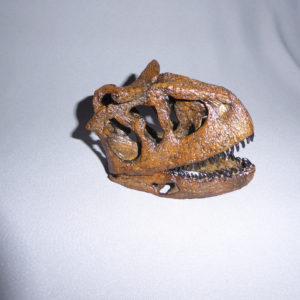

Carnotaurus Skull 1:8 Scale Replica
$70.00
Carnotaurus skull replica measures 4.4 x 1.7 x 2.7 inches. The Carnotaurus sastrei skull is a museum-quality polyurethane resin cast. 1:8 scale. Made in USA.
- Description
- Additional information
Description
Carnotaurus skull replica measures 4.4 x 1.7 x 2.7 inches. The Carnotaurus sastrei skull is a museum-quality polyurethane resin cast. 2-part skull (separate cranium and mandible). 1:8 scale. Made in USA.
Argentinian paleontologist José Bonaparte led the 1984 National Geographic expedition that unearthed the only known Carnotaurus skeleton.
This famous discovery occurred within the eighth phase of a long-term South American terrestrial vertebrate project. While weathering destroyed the lower legs and tail, the remaining articulated frame stayed remarkably intact.
Scientific Classification
- Kingdom: Animalia
- Phylum: Chordata
- Class: Reptilia
- Clade: Dinosauria
- Clade: Saurischia
- Clade: Theropoda
- Family: †Abelisauridae
- Clade: †Furileusauria
- Genus: †Carnotaurus Bonaparte, 1985
- Species: †C. sastrei
- Binomial name: †Carnotaurus sastrei Bonaparte, 1985
- Conservation status: Extinct
Abby, the Abelisaurus skull replica, is on an adventure to start his feather collection. He is so excited and has bought beautiful antique glass vases to display them. He invited all of his friends to go feather hunting in Vasona Park today.
Cammy, the Carnotaurus skull replica, already found a macaw parrot tail feather. It is really beautiful.
Avis, the Avimimus portentosus skull replica, is exploring Duck Island. He found a lot of goose and Muscovy duck feathers. The green is so shiny on the duck feathers.
Bored of hunting for feathers, Arch, the Archaeopteryx skull replica, rides the train to see the entire park.
Additional information
| Weight | 4.0 lbs |
|---|---|
| Dimensions | 4.4 × 1.7 × 2.7 in |
| National Dinosaur Day - June 1st | National Dinosaur Day is celebrated on June 1st every year. It's a day to learn about dinosaurs, including what they looked like, what they ate, and how they became extinct. |


