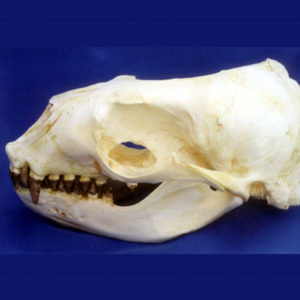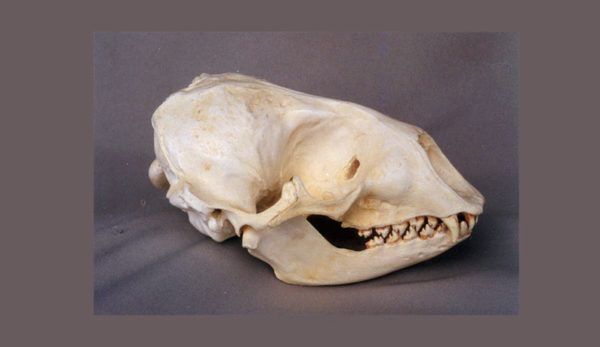

Harbor Seal Skull Replica
$212.00
The harbor seal, or common seal, lives on temperate and Arctic coasts. This widely distributed pinniped inhabits the North Atlantic and Pacific coasts.
- Description
- Additional information
Description
Harbor seal skull replica measures 7.9 x 4.7 x 3.9 inches. Phoca vitulina skull is museum-quality polyurethane resin cast from California Academy of Sciences specimen. 2-part skull (separate cranium and mandible). 1:1 scale. Made in USA.
Found in the northern Atlantic, Pacific, and Arctic oceans, the harbor seal lives along coastal waters and shores. This gregarious species basks on land in groups numbered in the thousands.
As active hunters, they feed on cod and herring, along with mollusks and crustaceans. This diet often causes conflict with commercial fishermen. These seals can reach thirty years of age in the wild. Phoca vitulina remains a common sight across North American coastlines and northern habitats.
Scientific Classification
- Kingdom: Animalia
- Phylum: Chordata
- Class: Mammalia
- Order: Carnivora
- Clade: Pinnipedia
- Family: Phocidae
- Genus: Phoca
- Species: P. vitulina
- Binomial name: Phoca vitulina
- Conservation status: Least concern
The harbor seal skull replica matches the California sea lion skull replica perfectly because these two species share the same rocky shorelines. You can also pair it with a sea otter skull replica to show how different animals live in the same kelp forests.
The massive killer whale skull replica represents the main predator that hunts these seals in costal waters. Together, these three replicas display the diverse live found along the North American coast.
Additional information
| Weight | 6.0 lbs |
|---|---|
| Dimensions | 7.9 × 4.7 × 3.9 in |
| International Seal Day - March 22nd | Every year on March 22nd, the International Day of the Seal promotes the conservation of seals worldwide. It’s also a day to celebrate this amazing marine mammal. A seal is a type of animal called a pinniped, which is Latin for “fin-footed.” Other pinnipeds include the walrus and sea lion. What makes seals different than other pinnipeds is that they don’t really use their flippers to walk. When on land, they usually slide around on their bellies. In the water, their flippers help them swim really fast. Seals are also much quieter and smaller than their sea lion and walrus cousins. |
You may also like…
-


Killer Whale Skull Replica
Price range: $1,300.00 through $1,650.00Select options This product has multiple variants. The options may be chosen on the product pageQuick View -


-