La Plata Dolphin Skull Replica
$439.00
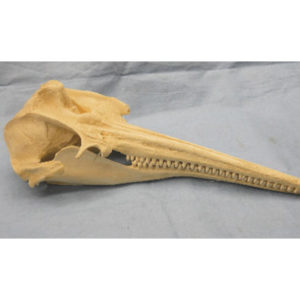
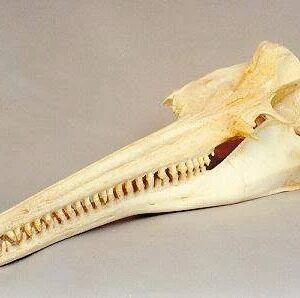
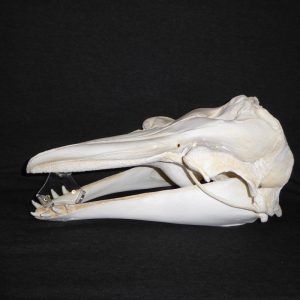
La Plata dolphin skull replica is 15.0 x 5.5 x 4.0 in. The Pontoporia blainvillei skull is a museum-quality polyurethane resin cast of a CAS specimen.
- Description
- Additional information
Description
La Plata dolphin skull replica measures 15.0 x 5.5 x 4.0 inches. The Pontoporia blainvillei skull is a museum-quality polyurethane resin cast of a California Academy of Sciences specimen. 2-part skull (separate cranium and mandible). 1:1 scale. Made in USA.
The La Plata dolphin live in the costal Atlantic waters of southeastern South America including the Rio de la Plata estuary. Its range extends from Brazil down to Argentina. It is the only river dolphin that inhabits the ocean and saltwater estuaries.
This animal moves very smoothly and slowly through the water. It is very hard to spot unless the conditions are completely calm. It usually swims along or in small groups.
The dolphin has a greyish brown body with a lighter underside. It features very board flippers and a rounded dorsal fin. This species has the longest beak of any dolphin relative to its body size. Inside its mouth, it has 48 to 61 teeth on each side of its jaws.
These animals feed along the ocean floor. They eat at least 24 different species of fish. They also hunt for octopus, squid and shrimp.
Scienific Classification
- Kingdom: Animalia
- Phylum: Chordata
- Class: Mammalia
- Order: Artiodactyla
- Infraorder: Cetacea
- Superfamily: Inioidea
- Family: Pontoporiidae
- Genus: Pontoporia
- Species: P. blainvillei
- Binomial name: Pontoporia blainvillei Gervais & d’Orbigny, 1844
- Conservation status: Vulnerable (IUCN 3.1)
Paula, the La Plata dolphin skull replica, is the team captain of the North American league of lacrosse. She has played lacrosse since she could walk and knows everything about the sport.
Amy, the Amazon River dolphin skull replica, is the fastest runner and scores all the goals. She is very proud of her accomplishments and brags a lot about them to her friends and parents.
Snaggle, the rough-toothed dolphin female skull replica, has wrestled the long crosse out of the opposing team’s best player’s hands. She screams hell-yeah at the top of her lungs on the field.
Rowdy, the Risso’s gray dolphin skull replica, is the referee. He loves blowing the whistle until his veins turn purple and stick out on his neck and his cheeks turn red. It is always an exciting game to play and watch.
Additional information
| Weight | 35.0 lbs |
|---|---|
| Dimensions | 15.0 × 5.5 × 4.0 in |