
Maiasaura Juvenile Skull Replica
$454.00
Researchers in 2007 discovered they ate fibrous plants, wood, bark, ferns, grasses and leaves, proving this dinosaur both browsed and grazed for food.
- Description
- Additional information
Description
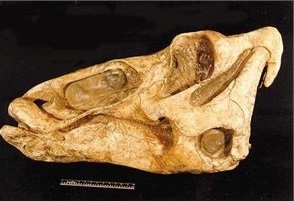
Maiasaura juvenile skull replica measures 12.0 x 5.0 x 4.0 inches. Maiasaura peeblesorum skull is museum-quality polyurethane resin cast. 2-part skull (separate cranium and mandible). 1:1 scale. Made in USA.
Laurie Trexler discovered the first skull of Maiasaura in 1979, which Jack Horner and Robert Makela then described as the species’ holotype.
Since this initial find consisted of a partial skull and mandible, researchers later recovered over 200 specimens across all age groups from the same Montana site.
Furthermore, these fossils proved the 30-foot dinosaurs featured flat beaks, thick noses, and small eye crests potentially used for headbutting during breeding seasons.
The generic name refers to the Greek goddess Maia, the “Good Mother”; to emphasize this, they used the feminine form of saurus: saura.
Scientific Classification
- Kingdom: Animalia
- Phylum: Chordata
- Class: Reptilia
- Clade: Dinosauria
- Clade: †Ornithischia
- Clade: †Ornithopoda
- Family: †Hadrosauridae
- Subfamily: †Saurolophinae
- Genus: †Maiasaura
- Type species: †Maiasaura peeblesorum Homer and Makela, 1979
- Conservation status: Extinct
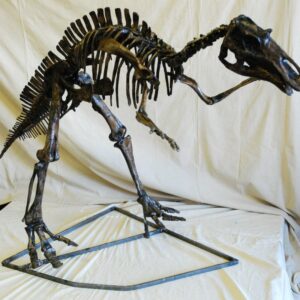
Highlight the diverse traits of the Maiasaura skull by adding the Edmontosaurus skull plaque replica to your collection. While that larger species shows the scale of adult herbivores, pairing the Maiasaura juvenile skeleton replica provides a complete look at their unique growth stages.
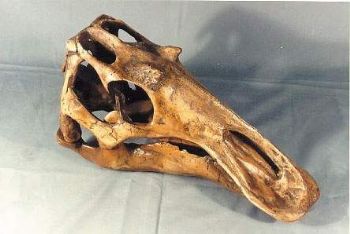
Furthermore, the Parasaurolophus skull plaque replica reveals how cranial ornaments changed between different families. These choices allow you to tell the full story of prehistoric parenting and development.
Additional information
| Weight | 12.0 lbs |
|---|---|
| Dimensions | 12.0 × 5.0 × 4.0 in |
| National Dinosaur Day - June 1st | National Dinosaur Day is celebrated on June 1st every year. It's a day to learn about dinosaurs, including what they looked like, what they ate, and how they became extinct. |