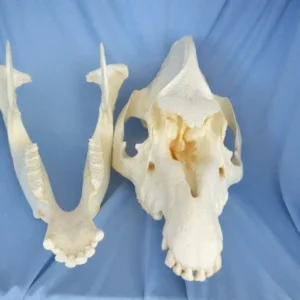
Malayan Tapir Skull Replica
$530.00
Malayan tapir skull replica is 17.0 x 8.0 x 9.5 in. The Tapirus indicus skull is a museum-quality polyurethane resin cast of a CAS specimen. 1:1 scale. Made in USA.
- Description
- Additional information
Description
Scientific Classification
- Kingdom: Animalia
- Phylum: Chordata
- Class: Mammalia
- Order: Perissodactyla
- Family: Tapiridae
- Genus: Tapirus
- Species: T. indicus
- Binomial name: Tapirus indicus
- Conservation status: Endangered
Mango, the Malayan tapir skull replica, sets up trail cams to find out where the mountain lion lives that has been stalking the neighborhood.
Burt, the Baird’s tapir skull replica, thinks this is a great idea and is waiting for Mango on the trails.
Tiptoe, the Baird’s tapir forefoot replica, is too afraid to leave his house. He is scared to death about being eaten by a mountain lion.
Brandi, the Brazilian tapir female skull replica, has already hung sixty- three trail cams and can’t wait to find out where the mountain lion lives that has been harassing the neighborhood.
Additional information
| Weight | 30.0 lbs |
|---|---|
| Dimensions | 17.0 × 8.0 × 9.5 in |
| World Tapir Day - April 27 | World Tapir Day takes place annually on April 27 to raise awareness about these critically endangered species and to advocate for their protection for future generations. These creatures are directly related to horses as well as rhinoceroses in terms of genetics. Neither the tapir nor this eclectic ancestry is new to the world; both are centuries old. Researchers believe that these animals have remained essentially the same for millions of years. |