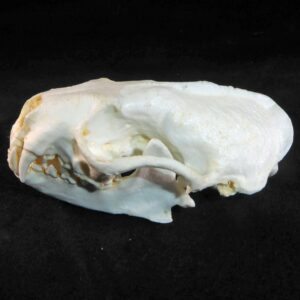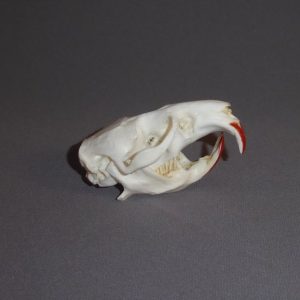
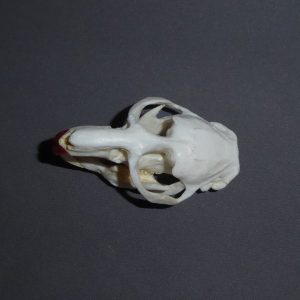

Muskrat Male Skull Replica
$61.00
Muskrat male skull replica is 2.3 x 1.5 x 1.2 in. The Ondatra skull is a museum-quality polyurethane resin cast of a CAS specimen. 1:1 scale. Made in USA,
- Description
- Additional information
Description
Muskrat male skull replica measures 2.3 x 1.5 x 1.2 inches. The Ondatra skull is a museum-quality polyurethane resin cast from California Academy of Sciences specimen. 2-part skull (separate cranium and mandible). 1:1 scale. Made in USA.
The muskrat lives in wetlands across many different climates. This species is native to North America and an introduced species in parts of Eurasia and South America.
The animal alters wetland ecology in crucial ways. It is also a resource of food and fur for humans.
Muskrats are covered with short, thick fur. The pelt is medium to dark brown or black in color. Their belly turns a partly gray color as age increases and makes the underside look a bit lighter.
Scientific Classification
- Kingdom: Animalia
- Phylum: Chordata
- Class: Mammalia
- Order: Rodentia
- Family: Cricetidae
- Subfamily: Arvicolinae
- Genus: Ondatra
- Species: O. zibethicus
- Binomial name: Ondatra zibethicus
- Conservation status: Least Concern
Musky, the muskrat male skull replica, is running through Marriott’s today, fully hyped and ready to conquer every single roller coaster in sight.
Northy, the North American beaver skull replica, is already on the log ride. It is his favorite ride and he never gets off the ride the entire day.
Nutty, the nutria skull replica, is in the gift shop nibbiling on everything in sight.
Minky, the American mink skull replica, has found a peaceful, quiet spot and has nestled down for a nice afternoon nap. She just rode the Tidal Wave and that was enough for one day for her.
Additional information
| Weight | 2.0 lbs |
|---|---|
| Dimensions | 2.3 × 1.5 × 1.2 in |
| World Muskrat Day - March 23rd | World Muskrat Day is celebrated on March 23rd. Muskrat are fascinating creatures that are native to Ontario and are known for their swimming abilities and adaptations for living in wetlands. |