

Raccoon Endocast Brain Replica
$32.00
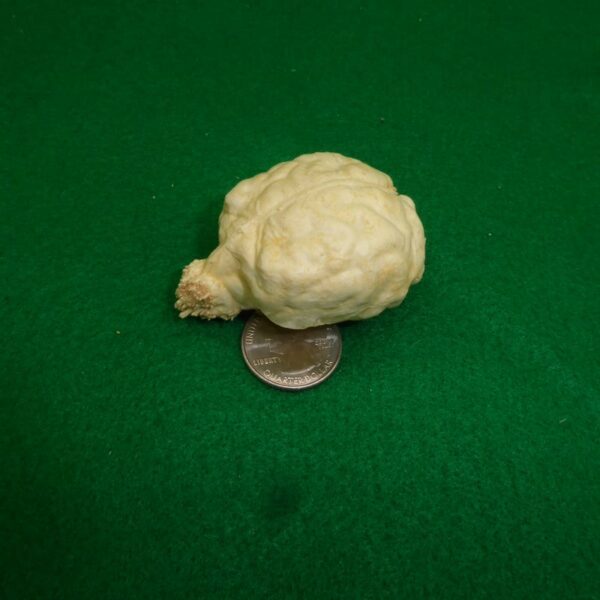
Raccoon endocast brain replica measures 2.5 x 1.7 x 1.2 inches. Procyon lotor brain is museum-quality polyurethane resin cast from CAS specimen. 1:1 scale.
- Description
- Additional information
Description
Raccoon Endocast Brain Replica for Procyonid Neuroethology
Raccoon endocast brain replica measures 2.5 x 1.7 x 1.2 inches. Procyon lotor brain is museum-quality polyurethane resin cast from CAS specimen. 1:1 scale. Made in USA.
Nomenclature and Masked Identity
The name raccoon originates from the Powhatan word arukan, which translates to “one who rubs with his hands.” People frequently call them northern raccoons or masked bandits due to their distinctive facial markings.
Scientifically, Procyon lotor specifically refers to their “washer” habit, as lotor means “the washer” in Latin. They are the largest members of the Procyonidae family. These mammals are often identified by their ringed tails and extremely dexterous front paws that function like human hands.
Evolutionary History and Adaptive Brain
Raccoons represent a highly successful lineage of omnivores that diverged from a common ancestor with mustelids and bears. They possess a remarkably complex brain structure that consequently allows for elite problem-solving skills. Their neural anatomy specifically prioritizes somatosensory processing to manage the high volume of tactile data from their sensitive paws.
Interestingly, they can remember the solutions to complex tasks for up to three years. Therefore, their biological development reflects millions of years of adaptation to diverse environments from forests to urban centers.
Geographic Expansion and Urban Ecology
Humans historically introduced this species to Europe and Japan, where they have currently established thriving feral populations. Because they are incredibly adaptable, they expanded their original forest range into coastal marshes and mountainous regions.
They are not suitable for domestication due to their high intelligence and destructive curiosity. Modern researchers therefore study their urban behavior to understand how nocturnal carnivores exploit human food sources. These animals currently serve as a primary model for studying cognitive flexibility in non-primates.
Scientific Classification
- Kingdom: Animalia
- Phylum: Chordata
- Class: Mammalia
- Order: Carnivora
- Family: Procyonidae
- Genus: Procyon
- Species: P. lotor
- Binomial name: Procyon lotor (Linnaeus, 1758)
- Conservation status: Least concern (IUNC 3.1)
Examine Procyonid Sensory Morphology
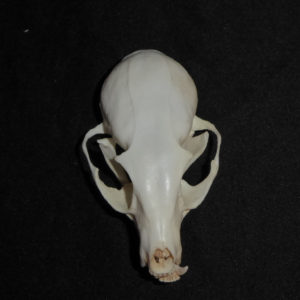
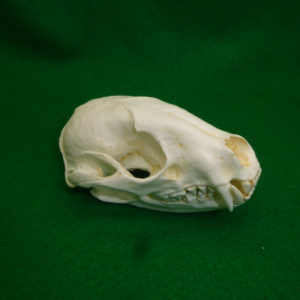
Compare this raccoon endocast brain replica to the raccoon male skull replica, the coatimundi coati male skull replica, and the ringtail skull replica for a specialized study. This grouping allows you to analyze the mammal’s neural capacity against the specialized cranial anatomy of different procyonid species.
Additional information
| Weight | 1.5 lbs |
|---|---|
| Dimensions | 2.5 × 1.7 × 1.2 in |
| Raccoon Facts | Kingdom: Animalia |