

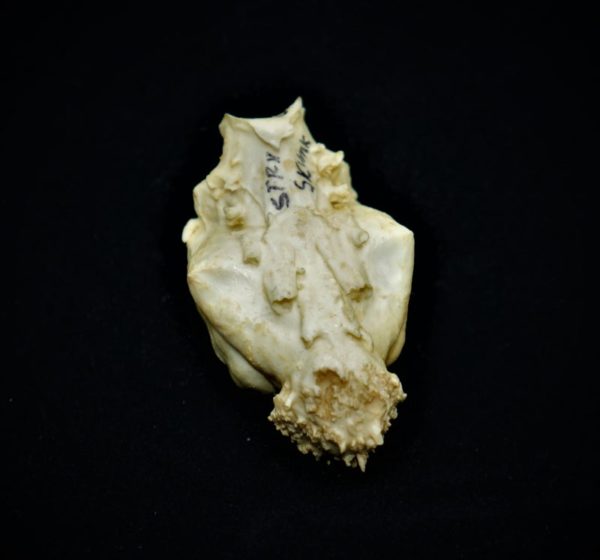


Striped Skunk Brain Replica
$26.00
The lissencephalic brain of this mephitid specimen lacks complex surface folding which reflects the relatively simple social structure of the species.
- Description
- Additional information
Description
Striped Skunk Brain Replica for Zoology
Striped skunk brain replica measures 1.8 x 1.0 x 0.8 inches. Mephitis mephitis brain is museum-quality polyurethane resin cast of CAS specimen. 1:1 scale. Made in USA.
Natural History and Nomenclature
The common name for the skunk actually comes from early Algonquian languages. Historically, these indigenous names focused on the animal’s powerful scent glands. Scientifically, the genus name Mephitis is a Latin term that literally translates to a foul odor. This root gives us the modern biological term mephitine.
Within their social groups, people call the males boars. In contrast, females are known as sows, while their offspring are called kits or pups. Because this species is so common across North America, most people simply call it “the skunk.”
Phylogenetic Development
The striped skunk is a highly specialized member of the Mephitidae family. Although it is an opportunistic omnivore, its skull structure shows a facial region perfectly adapted for foraging. Evolution favored a stout body and shorter limbs to support its ground-dwelling lifestyle. Consequently, the adult cranium displays distinct features that separate it from its mustelid cousins. This evolutionary development helped the animal become a successful survivor across diverse landscapes ranging from Canada down to Mexico.
Anthropogenic Interaction and Ethology
The striped skunk shares a long and colorful history with human civilization. For centuries, humans have easily recognized them by their bold black and white warning colors.
They also appear frequently in global folklore and modern media as the ultimate symbol of chemical defense. Because they are incredibly adaptable, these mammals often thrive in human-modified suburban environments. Interestingly, modern researchers have started studying the complex chemistry of their musk. This unique scientific project has finally led to a better understanding of how they effectively ward off predators.
Scientific Classification
- Kingdom: Animalia
- Phylum: Chordata
- Class: Mammalia
- Order: Carnivora
- Family: Mephitidae
- Genus: Mephitis
- Species: M. mephitis
- Binomial name: Mephitis mephitis (Schreber, 1776)
- Conservation status: Least concern (IUCN 3.1)
Investigate Mephitidae Cranial Variations
Displaying this striped skunk brain replica alongside its most common relatives provides a technical look at the Mephitidae family. To build a professional research set, pair this brain with a striped skunk skull replica, a hooded skunk skull replica, and a hog-nosed skunk skull replica. This grouping allows you to analyze the omnivore’s neural structure against the specialized cranial anatomy of different North American skunk species that evolved unique features to exploit various ecological niches.
Additional information
| Weight | 3.0 lbs |
|---|---|
| Dimensions | 1.8 × 1.0 × 0.8 in |


