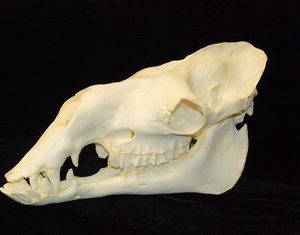
Yesterday’s Camel Brain Replica
$105.00
Yesterday’s camel brain replica measures 7.7 x 4.4 x 4.0 inches. Camelops hesternus brain replica is museum-quality polyurethane resin cast from CAS specimen. 1:1 scale.
- Description
- Additional information
Description
Yesterday’s camel brain replica measures 7.7 x 4.4 x 4.0 inches. Camelops hesternus brain is a museum-quality polyurethane resin cast from a CAS specimen. 1:1 scale. Made in USA.
The family Camelidae specifically originated in North America during the middle Eocene period. While many associate these animals with distant deserts, they thrived across the Western Hemisphere for millions of years. Scientifically, Camelops hesternus belongs to the Camelini group. They are more closely related to modern Bactrian camels than to South American llamas or alpacas. This species remains one of the most iconic true camels of the Pleistocene epoch.
Camelops hesternus first appeared roughly four million years ago in southern North America. They possessed a highly developed brain that consequently allowed them to adapt to diverse river channel environments.
Their neural anatomy specifically evolved to manage complex sensory data while navigating across coarse gravel landscapes. Interestingly, camels migrated to Asia roughly seven million years ago before diversifying into modern forms. Therefore, their biological development reflects a long history of successful artiodactyl migration and survival.
Researchers frequently find these fossils within specific layers like the Tauna Gravels in present-day Idaho. Because they were large herbivores, they were identified by their significant height and robust skeletal structure.
They eventually faced extinction approximately ten thousand years ago along with other North American megafauna. Scientists therefore study these endocasts to understand how ancient camels processed environmental changes.
Scientific Classification
- Kingdom: Animalia
- Phylum: Chordata
- Class: Mammalia
- Order: Artiodactyla
- Family: Camelidae
- Genus: †Camelops
- Species: †C. hesternus
- Binomial name: †Camelops hesternus (Leidy, 1873)
- Conservation status: Extinct (~11,000 years ago)
The Yesterday’s camel brain pairs well with the Yesterday’s camel skull replica, the dromedary camel skull replica, and the Yesterday’s camel skeleton replica for a deep immersive look into prehistoric life.
Additional information
| Weight | 6.0 lbs |
|---|---|
| Dimensions | 7.4 × 4.4 × 4.0 in |
| Time | "Yesterday's camel" (Camelops hesternus) lived from the Middle Pliocene to the Late Pleistocene (roughly 4 million to 10,000 years ago). |
| Size | Shoulder Height: Approximately 7 feet (2.2 meters). Body Length: About 11 feet (3.4 meters). Weight: Estimates range from 963 pounds (437 kg) to over 1,800 pounds (800 kg), possibly up to 2,200 pounds (1,000 kg). |
| Range | It roamed across western North America, from Alaska to Mexico. |