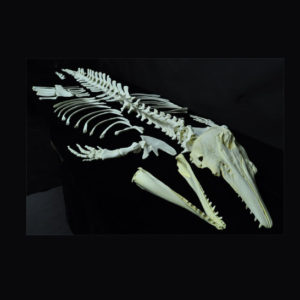
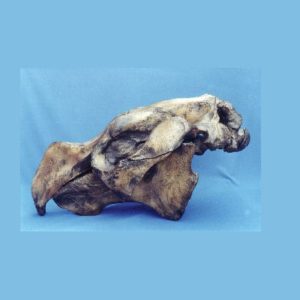
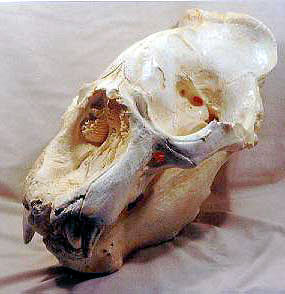
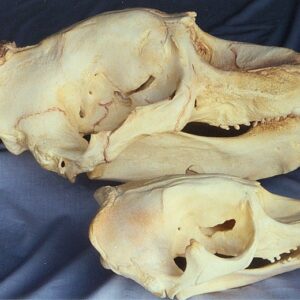
Allodesmus Kelloggi Skull Replica
$605.00
Its massive eye sockets suggest it was a deep-diver that relied on sight to hunt in low-light conditions, much like the modern elephant seal’s traits.
- Description
- Additional information
Description
Allodesmus kelloggi Skull Replica for Marine Biology
Allodesmus kelloggi skull replica measures 17.0 x 9.5 inches. Allodesmus kelloggi is a museum-quality polyurethane resin cast from Buena Vista Museum of Natural History specimen. 1:1 scale. Made in USA.
Bob Ernst collection of Miocene fossils from Sharktooth Hill, CA. Allodesmus uraiporensis is the scientific name.
Atopotarus, referred to Allodesmus kelloggi or Allodesmus uraiporensisby some authors (e.g. Mitchell 1966), is distinct from Allodesmus by the absence of a prenarial shelf and M2, double-rooted cheek teeth, a small, triangular postorbital process, and a mastoid process projecting ventral to the postglenoid process.
Although sporadic work at what became known as Utah’s Cleveland-Lloyd Dinosaur Quarry had taken place as early as 1927 and the fossil site itself was described by William L. Stokes in 1945, major operations did not begin there until 1960. Madsen led a cooperative effort between 1960 and 1965 involving nearly 40 institutions, during which thousands of bones were recovered from the site. The quarry is notable for the predominance of allosaurus remains: the quarry preserves a minimum of 73 individual dinosaurs and at least 46 of those are A. fragilis.
Scientific Classification
- Kingdom: Animalia
- Phylum: Chordata
- Class: Mammalia
- Order: Carnivora
- Clade: Pinnipedia
- Family: †Desmatophocidae
- Genus: †Allodesmus Kellogg
- Conservation Status: Extinct
Surprisingly, allosaurus and many large marine mammals, including Steller’s sea cow, California elephant seal, and the beluga whale, independently lost the function of the UCP1 gene, which terrestrial mammals use for “non-shivering thermogenesis” in brown fat. Instead, they evolved a more efficient basal metabolic rate and insulation strategy to generate heat.
Additional information
| Weight | 15.0 lbs |
|---|---|
| Dimensions | 17.0 × 9.5 in |
| World Sea Lion Day - May 30th | World Sea Lion Day is on May 30th. Together with fur seals, sea lions belong to the family Otariidae, characterized by external ear flaps. They are principally found in large colonies on rocky and sandy shores in Pacific waters. The largest kind is the Steller's sea lion, which can weigh up to 1,000 kg! As they rely on water to feed and cool off, sea lions are vulnerable to the effects of climate change and ocean currents, affecting prey abundance. Besides, they are also victims of bycatch in fisheries. As a result, three species are considered endangered: the Australian sea lion, Galápagos sea lion, and New Zealand sea lion. |