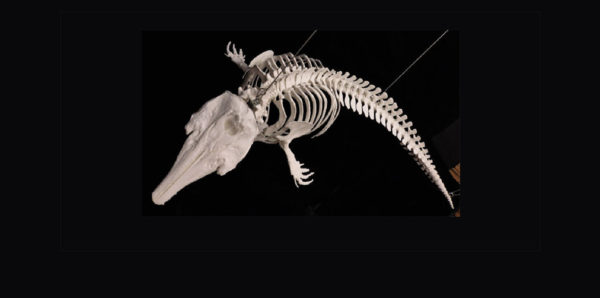


Beluga Whale Articulated Skeleton Replica
Price range: $8,800.00 through $9,450.00
Beluga whale articulated skeleton replica is 125.0 x 44.5 x 42.0 in. The Delphinapterus leucas is a museum-quality polyurethane resin cast from SDNHM specimen.
- Description
- Additional information
Description
Beluga whale articulated skeleton replica measures 125.0 x 44.5 x 42.0 inches. The Delphinapterus leucas is a museum-quality polyurethane resin cast of a San Diego Museum of Natural History specimen. 1:1 scale. Made in USA.
Important Production and Shipping Notice
This museum-quality replica is made to order. It requires additional time for casting. Please call our customer service team at 1-509-951-3557 to check current availability and turnaround times. Additional shipping charges may apply. Please contact our sales team for a personalized shipping quote to your location.
The beluga whale originates from the cold Arctic Ocean and surrounding northern seas. Its geographic range covers coast waters around North America, Russia, and Greenland. Shallow estuaries and freezing sheet ice areas provide the primary habitat for this stocky whale.
Scientific Classification
- Kingdom: Animalia
- Phylum: Chordata
- Class: Mammalia
- Order: Artiodactyla
- Infraorder: Cetacea
- Family: Monodontidae
- Genus: Delphinapterus Lacépède, 1804
- Species: D. leucas
- Binomial name: Delphinapterus leucas
- Conservation status: Least Concern
Big Bertha, the beluga whale articulated skeleton replica, has opened her Yoga Studio. She named it Bertha’s Yoga Studio and their slogan is Flex Your Inner Fin.
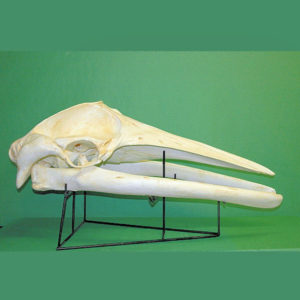
Memo, the Minke whale skull replica, is completely obsessively visits the studio. He loves watching all the sexy hot girls with dew on their faces.
Finn, the short-finned pilot whale skull replica, can twist his rostrum into a perfect downward-facing dog pose.
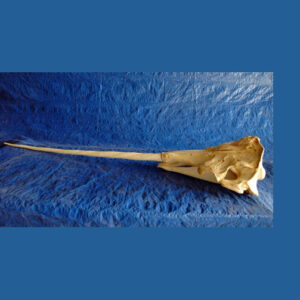
Lance, the narwhal whale skull and tusk replica, accidentely pokes holes in the yoga mats with his long sharp tusk. Bertha has kindly asked him to wear a bright pink tennis ball on the tip of his tusk. He laughs, and puts it on before class begins.
Additional information
| Weight | 200.0 lbs |
|---|---|
| Dimensions | 125 × 44.5 × 42.0 in |