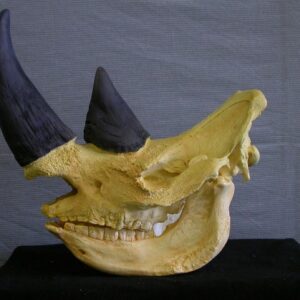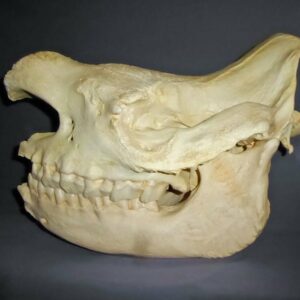

Black Rhinoceros Male Skull Replica
$1,013.00
Black rhinoceros male skull replica measures 23.0 x 13.5 x 12.0 inches. The Diceros bicornis skull is a museum-quality polyurethane resin cast of a CAS specimen.
- Description
- Additional information
Description
Black rhinoceros male skull replica measures 23.0 x 13.5 x 12.0 inches. The Diceros bicornis skull is a museum-quality polyurethane resin cast of a California Academy of Sciences specimen. 2-part skull (separate cranium and mandible). 1:1 scale. Made in USA.
The black rhinoceros native to eastern and southern Africa including Botswana, Kenya, Malawi, Mozambique, Namibia, South Africa, Eswatini, Tanzania, Zambia, and Zimbabwe. Although people refer to the rhinoceros as black, its colors vary from brown to grey.
They consume twigs, branches, leaves, shoots, thorny bushes, fruits, and tree bark. To substain their massive body weight, an adult must eat roughly 50 to 70 pounds of vegetation daily.
Scientific Classification
- Kingdom: Animalia
- Phylum: Chordata
- Class: Mammalia
- Infraclass: Placentalia
- Order: Perissodactyla
- Family: Rhinocerotidae
- Genus: Diceros
- Species: D. bicornis
- Binomial name: Diceros bicornis
- Conservation status: Critically Endangered
Dozer, the black rhinoceros skull replica, is in charge of security. He is already at the parade making sure all is going smoothly.
Watson, the white rhinoceros skull replica, is eating his candy that he bought for the little ones.
Geoffrey, the giraffe adult male replica, is going to be in a parade for the children today. Everyone is excited.
Babar, the African elephant skull replica, is in charge of gently tossing the candy for the children.
Hungry, the hippopotamus skull replica, is riding on the float she made and waving at the crowd.
Additional information
| Weight | 35.0 lbs |
|---|---|
| Dimensions | 23.0 × 13.5 × 12.0 in |
| World Rhino Day - September 22nd | World Rhino Day is celebrated on September 22nd each year to raise awareness and funds for the five rhino species: black, white, greater one-horned, Sumatran, and Javan. The day brings together zoos, NGOs, rhino sanctuaries, and concerned citizens from around the world to highlight the threats facing rhinos, such as poaching, habitat loss, disease, and natural disasters. |
You may also like…
-
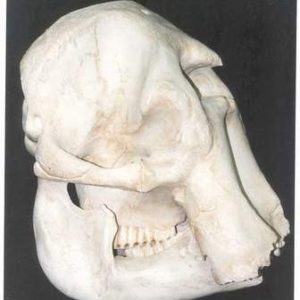

African Elephant Skull Replica
Price range: $2,500.00 through $2,800.00Select options This product has multiple variants. The options may be chosen on the product pageQuick View -


-


-