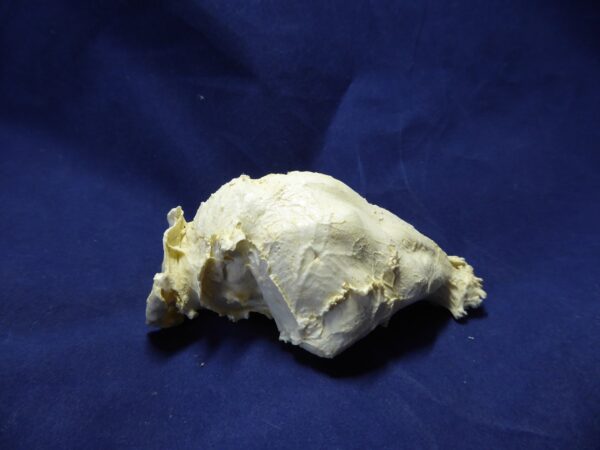
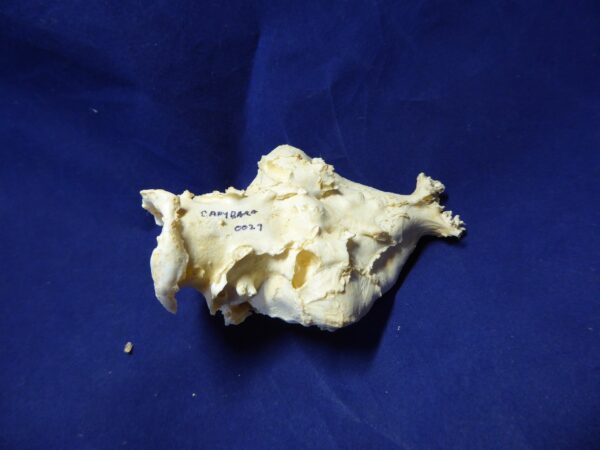

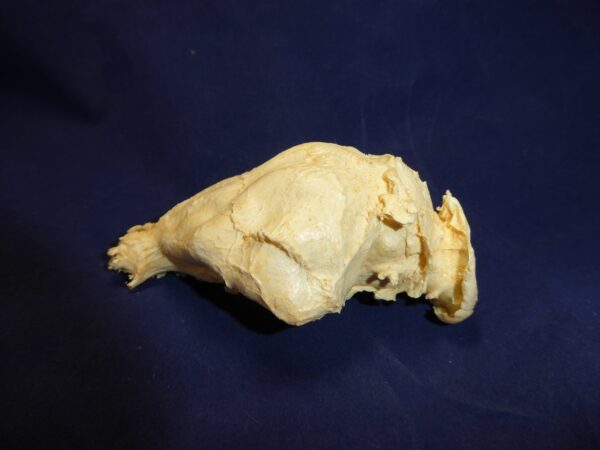
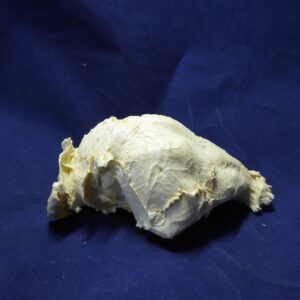
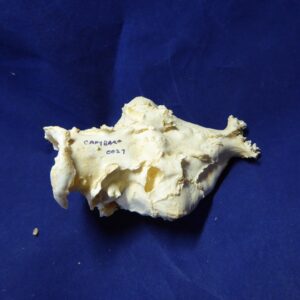
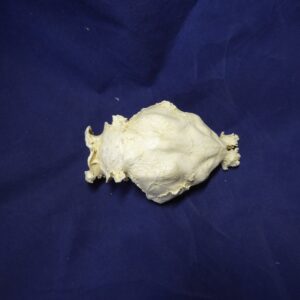
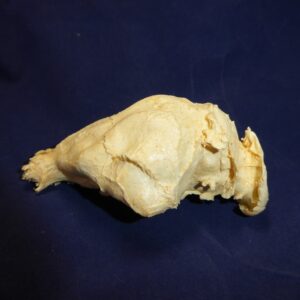
Capybara Brain Replica
$32.00
Capybaras possess highly folded brains with many cortical grooves, showing the greatest level of complexity among rodents to support social behaviors.
- Description
- Additional information
Description
Capybara Brain Replica for Mammalogy Study
Capybara brain replica measures 4.0 x 2.5 x 1.7 inches. Hydrochoerus hydrochaeris brain is museum-quality polyurethane resin cast from CAS specimen. 1:1 scale. Made in USA.
Meet the Capybara
The capybara is the largest living rodent on the planet. These animals live in every South American country except for Chile. Because they are semiaquatic, they thrive in both savannas and thick forests. They usually stay near the water to feed on grasses.
This species belongs to the genus Hydrochoerus alongside the lesser capybara. Their closest relatives are actually guinea pigs and rock cavies, but they also share a distant link to the nutria.
Evolutionary History
The capybara and the lesser capybara both belong to the subfamily Hydrochoerinae along with the rock cavies. Living capybaras and their extinct relatives were previously classified in their own family called Hydrochoeridae.
Since 2002, molecular phylogenetic studies have recognized a close relationship between Hydrochoerus and Kerodon, the rock cavies. This research supports the placement of both genera in a subfamily of Caviidae.
Social Life and Ecology
Capybaras are highly social mammals. They typically live in family groups of ten to twenty individuals. However, researchers occasionally find groups of up to one hundred members. Because of their size, people often hunt them for their meat and thick hides. Their unique social structure and large brain size make them a fascinating subject for any neurological study.
Scientific Classification
- Kingdom: Animalia
- Phylum: Chordata
- Class: Mammalia
- Order: Rodentia
- Family: Caviidae
- Genus: Hydrochoerus
- Species: H. hydrochaeris
- Binomial name: Hydrochoerus hydrochaeris (Linnaeus, 1766)
- Conservation status: Least concern (IUCN 3.1)
Study Convergent Evolution in Megarodents
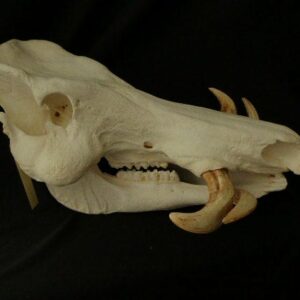
You can display this capybara brain model alongside a hippopotamus skull replica and a giant forest hog skull replica for a masterclass in morphology. These species are not closely related, but they have evolved similar physical solutions for life in the water.
By comparing the capybara to the hippopotamus, you can show how nature shapes different lineages to fit the same role. Adding the giant forest hog skull replica provides a detailed look at how different mammals developed similar grazing structures. These replicas help you bridge the gap between rodent biology and the anatomy of much larger animals.
Additional information
| Weight | 3.5 lbs |
|---|---|
| Dimensions | 4.0 × 2.5 × 1.7 in |