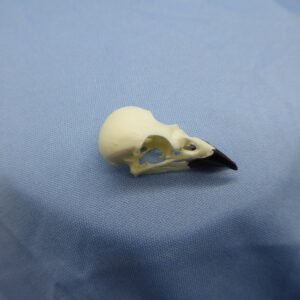
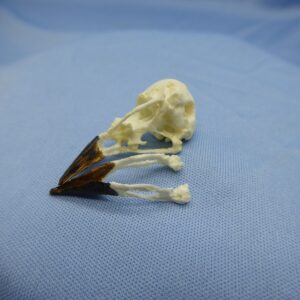
Common Cactus Finch Skull Replica
$85.00
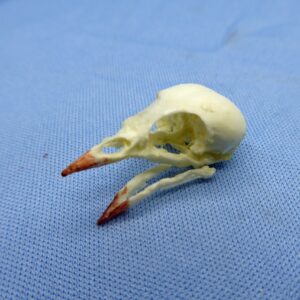
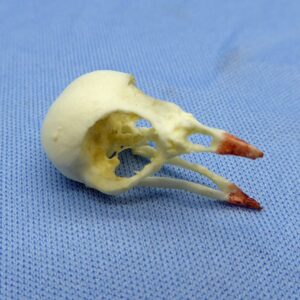
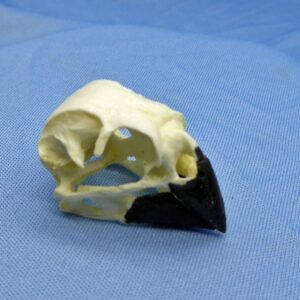
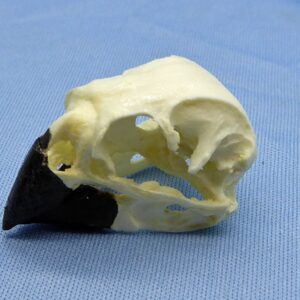
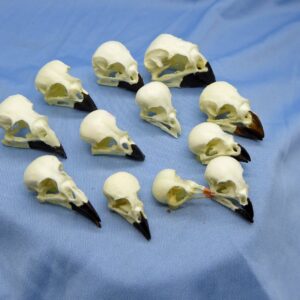
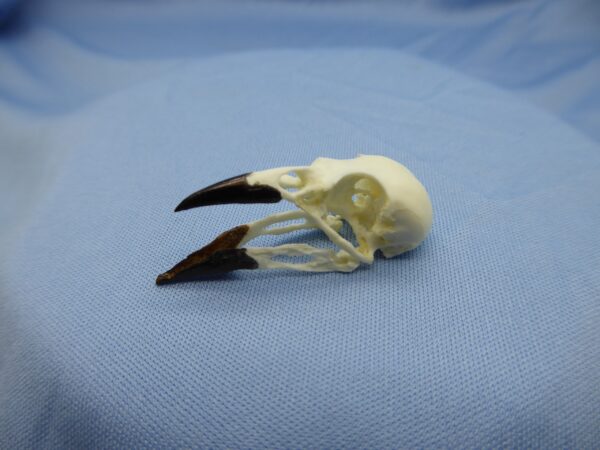
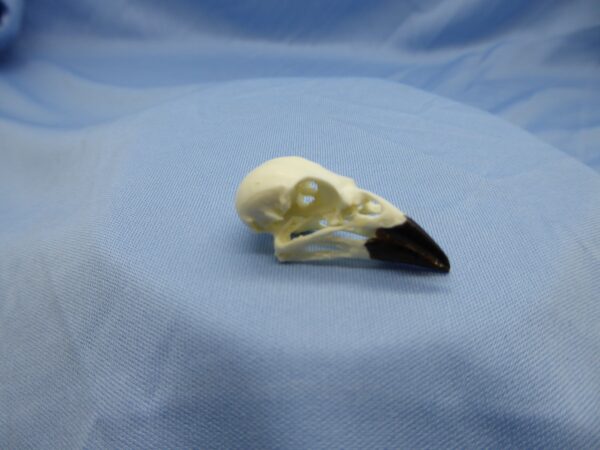
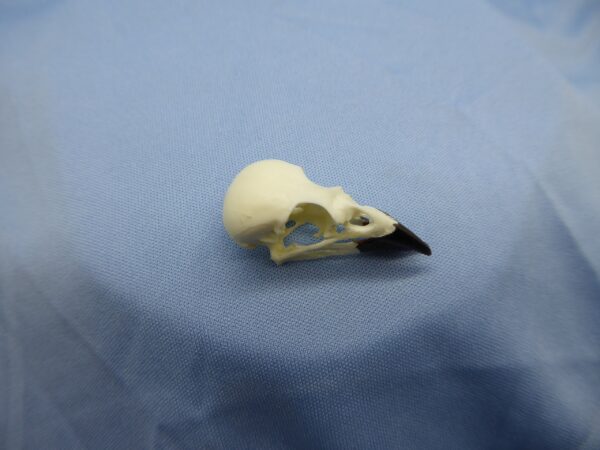
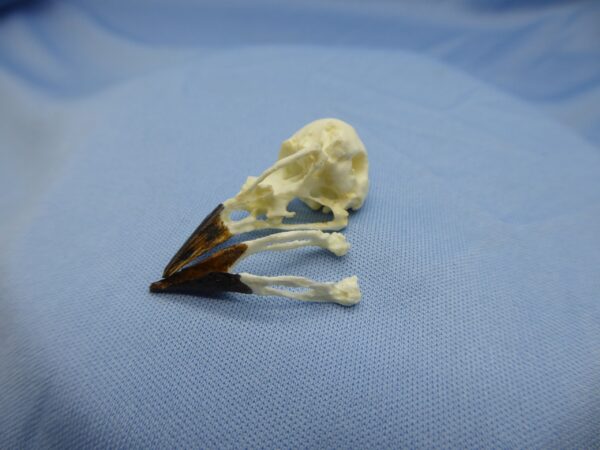
Common cactus finch skull replica is 0.86 x 0.46 x 0.42 in. Geospiza scandens is museum-quality polyurethane cast of CAS specimen for ornithology.
- Description
- Additional information
Description
Common cactus finch skull replica measures 0.86 x 0.46 x 0.42 inches. Geospiza scandens is museum-quality polyurethane resin cast from CAS specimen. 2-part skull (separate cranium and mandible). 1:1 scale. Adult male. Made in USA.
This bird lives only on the Galápagos Islands. The common catus finch is a master of the arid Galápagos lowlands. They showcase unique beak shapes for a specialized diet. This diet centers on the Opuntia cactus.
Adult males possess a long bill. This bill is deep at the base. It provides a powerful tool for using cactus resources. This shape allows the bird to puncture tough cactus fruit. The bird then reaches protected seeds.
Its relatives have more delicate beaks. In contrast, this bid had a beak optimized for precise probing.
Scientific Classification
- Kingdom: Animalia
- Phylum: Chordata
- Class: Aves
- Order: Passeriformes
- Family: Thraupidae
- Genus: Geospiza
- Species: G. scandens
- Binomial name: Geospiza scandens (Gould, 1837)
- Conservation status: Least Concern (IUCN 3.1)
The common cactus finch possesses a specialized long, decurved bill uniquely adapted for feeding on the flowers and fruits of the Opuntia cactus. Biologists study these CAS 1:1 scale casts to analyze the robust probing morphology of this iconic Darwin’s finch. Expand your avian research collection with the woodpecker finch skull, small tree-finch skull, and large ground-finch skull. Find more high-fidelity specimens available in our bird or aves replica store.
Additional information
| Weight | 2.0 lbs |
|---|---|
| Dimensions | 0.86 × 0.46 × 0.42 in |