
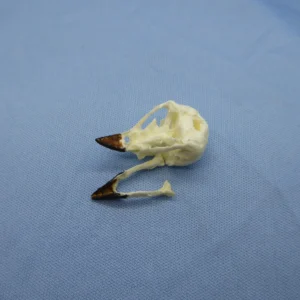
Small Tree-Finch Skull Replica
$85.00
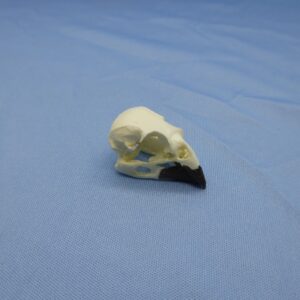
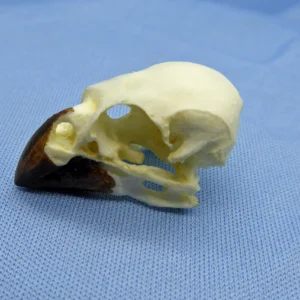
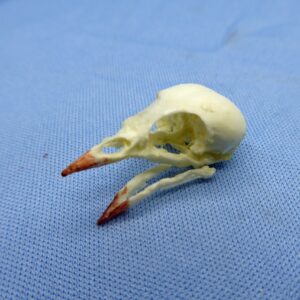
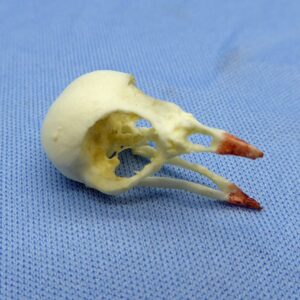
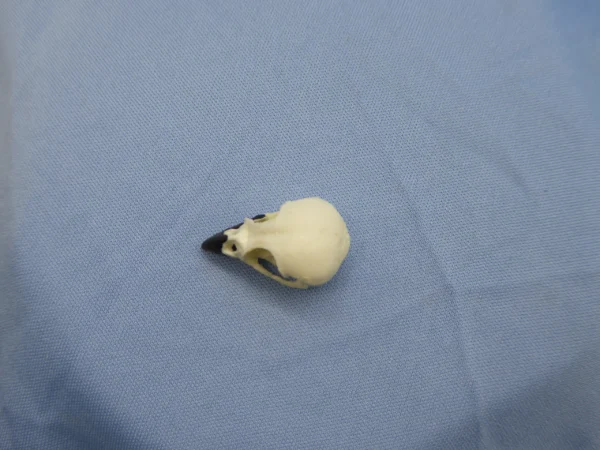
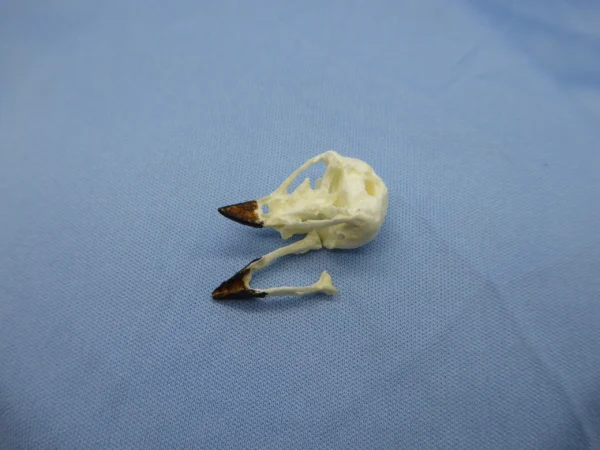
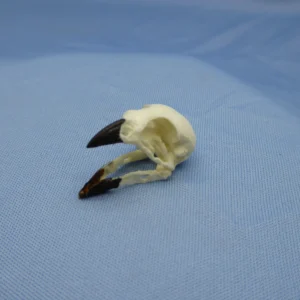
Small tree-finch skull replica is 0.70 x 0.45 x 0.40 in. The Camarhynchus parvulus skull is a museum-quality polyurethane resin cast from CAS specimen.
- Description
- Additional information
Description
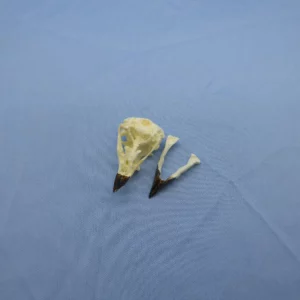
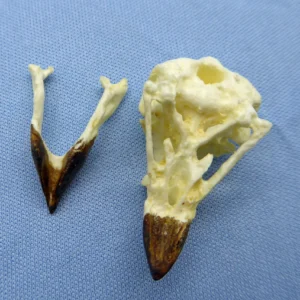
Small tree-finch skull replica measures 0.70 x 0.45 x 0.40 inches. The Camarhynchus parvulus skull is a museum-quality polyurethane resin cast from California Academy of Sciences specimen. 2-part skull (separate cranium and mandible). 1:1 scale. Made in USA. Skull is an adult male.
The small tree-finch ranks as the smallest tree finch, living only on the Galápagos islands. This tiny bird measures about 4.3 inches long and weighs around 0.029 pounds, featuring a short, curved, and stubby beak with a strongly convex upper edge.
Males have a black hood covering the head, throat, and upper breast, contrasting with an olive-brown back and a pale, white belly. Females look much duller.
This bird uses its short, curved bill to grasp food tightly as it hunts actively for insects and larvae inside tree leaves and under bark. It rarely searches for food on the ground, though it also consumes seeds, nectar and fleshy fruits when available.
Scientific Classification
- Kingdom: Animalia
- Phylum: Chordata
- Class: Aves
- Order: Passeriformes
- Family: Thraupidae
- Genus: Camarhynchus
- Species: C. parvulus
- Binomial name: Camarhynchus parvulus (Gould, 1837)
- Conservation status: Least Concern (IUCN 3.1)
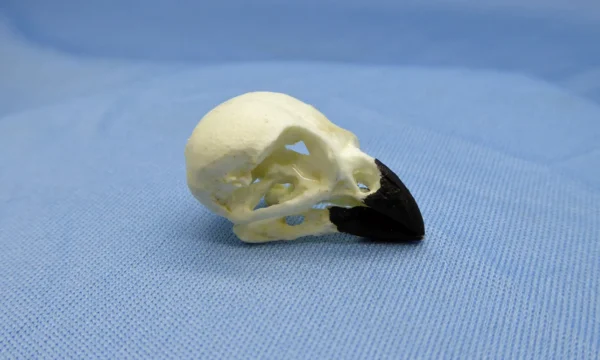
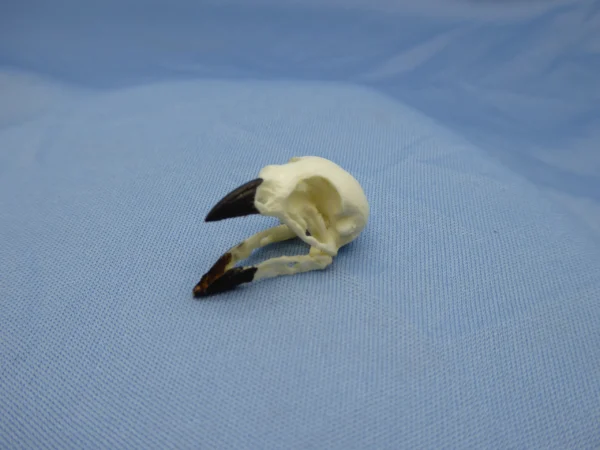
Pip, the small tree-finch skull replica, is going out to mow her lawn. It is two weeks past due for a mow. She really needs help pushing the lawn mower and has offered to serve lunch if Chrusher, Cruz, and Fern come over to help.
Crusher, the large cactus-finch skull replica, bought her a brand-new battery-operated lawn mower from Ace Hardware.
Cruz, the medium ground-finch skull replica, is sitting in the shade drinking a beer, not helping at all.
Fern, the green warbler finch skull replica, is unrolling the hose and getting ready to place it on the lawn after Crusher is finished mowing.
They all enjoyed a delicious lunch together in the shade and her lawn looks like a golf course now.
Additional information
| Weight | 2.0 lbs |
|---|---|
| Dimensions | 0.70 × 0.45 × 0.40 in |