Description
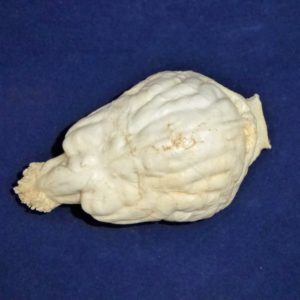
Coyote Brain Replica for Biology
Coyote brain replica measures 7.0 x 2.1 x 0.8 inches. Canis latrans brain is museum-quality polyurethane resin cast from CAS specimen. 1:1 scale. Made in USA.
Etymology and Terminology
The name coyote originates from the Nahuatl word coyotl, which literally translates to “trickster.” Spanish explorers later adapted this term as they encountered the species throughout the Southwest. People also frequently refer to these canids as prairie wolves or brush wolves depending on their specific regional habitat. Scientifically, Canis latrans translates to “barking dog,” which specifically describes their unique vocal range. While they share the same genus as domestic dogs, they remain a distinct and highly resilient North American species.
Evolutionary History
Coyotes represent a highly successful lineage that diverged from a common ancestor with wolves several million years ago. They possess a versatile neural structure that allows them to thrive in diverse climates. Their ancestors originally inhabited open grasslands, but they eventually expanded into forests and mountains. This adaptation consequently led to a highly developed sensory system capable of tracking varied prey. Unlike larger wolves, the coyote evolved a more flexible social brain. This biological development specifically allows them to hunt either in pairs or as solitary opportunists.
Human Association and Domestication
Native American folklore often portrays the coyote as a clever and mischievous creator deity. Because they are incredibly resourceful, these animals have successfully moved into major urban centers. Humans historically hunted them for fur, yet their populations continue to grow across the continent. They are not suitable for domestication due to their strong predatory instincts. Researchers therefore study their brain activity to understand how wild carnivores navigate human-dominated landscapes. These studies provide vital data on how species adapt to rapid environmental changes.
Scientific Classification:
- Kingdom: Animalia
- Phylum: Chordata
- Class: Mammalia
- Order: Carnivora
- Family: Canidae
- Genus: Canis
- Species: C. latrans
- Binomial name: Canis latrans Say, 1823
- Conservation status: Least concern (IUCN 3.1)
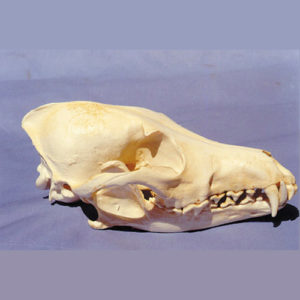
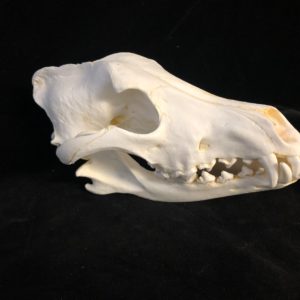
View our caninidae replicas for comparison analysis to add to your zoology collection coyote male skull replica, red fox skull replica and our gray timber wolf skull replica. This grouping allows you to analyze the predator’s neural capacity against the specialized cranial anatomy of different canid sizes. By placing the brain beside the coyote male skull replica, you can demonstrate the specific relationship between encephalization and hunting strategy. The addition of the red fox skull replica and our gray timber wolf skull replica completes the data on predatory niche specialization and cranial diversity.