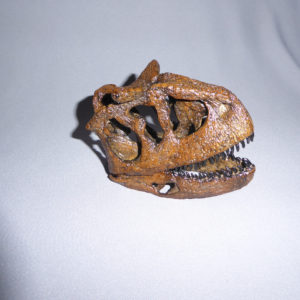
Gasparinisaura cincosalternis Skull Replica
$116.00
This bipedal walker had a low neck and thin limb bones. Specifically, it possessed five digits on each hand to grasp food in the wild across river beds.
- Description
- Additional information
Description
Gasparinisaura cincosalternis skull replica measures 2.8 inches. The Gasparinisaura skull is museum-quality polyurethane resin cast. 2-part skull (separate cranium and mandible). 1:1. Made in USA.
Gasparinisaura lived in North Patagonia during the Late Cretaceous period. This small, bipedal herbivore grew to a length of 1.7 meters and weighed thirteen kilograms. Specifically, paleontologists found the first bones in 1992 near Cinco Saltos in Argentina.
The dinosaur featured a rounded, elongated head. Its large eye sockets sat in a high position. A thin branch of the jugal bone wedged between the maxilla and lacrimal. The back of the head hung down in a pregnant style.
Scientific Classification
- Kingdom: Animalia
- Phylum: Chordata
- Class: Reptilia
- Clade: Dinosauria
- Clade: †Ornithischia
- Clade: †Ornithopoda
- Clade: †Elasmaria
- Genus: †Gasparinisaura Coria & Salgado, 1996
- Species: †G. cincosaltensis
- Binomial name: †Gasparinisaura cincosaltensis Coria & Salgado, 1996
- Conservation Status: Extinct
Pair the Gasparinisaura with other South American specimens to complete your Late Cretaceous collection. Feature the Abelisaurus skull replica to contrast this small herbivore with a thirty-foot-long predator. Specifically, the Giganotosaurus skull replica highlights the massive size of the largest meat-eaters from the same Argentine region.
Include the Carnotaurus skull replica to show the unique bull-like horns of another famous local hunter. These specialized bone casts reveal the striking diversity of ancient life from the Patagonia formations.
Additional information
| Weight | 8.0 lbs |
|---|---|
| Dimensions | 2.8 in |
| National Dinosaur Day - June 1st | National Dinosaur Day is celebrated on June 1st every year. It's a day to learn about dinosaurs, including what they looked like, what they ate, and how they became extinct. |