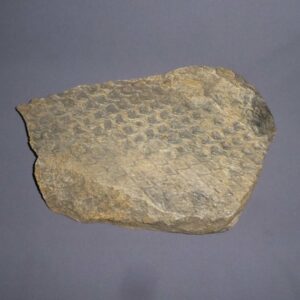
Lepidodendron Aculeatum Bark Fossil Replica
$45.00
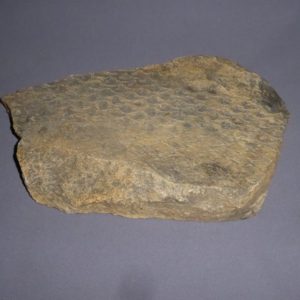
Explore the ancient world with this Lepidodendron aculeatum bark fossil replica. Perfect for paleobotany education, this scale tree model features leaf scars.
- Description
- Additional information
Description
Lepidodendron Aculeatum bark fossil replica measures 9.0 x 6.0 inches. Museum-quality polyurethane resin cast from original specimen. 1:1 scale. Made in USA.
Lepidodendron, also known as scale tree, is an extinct prehistoric tree which was one of the most abundant trees of the Carboniferous period.
It could grow to a height of over 180 feet and its trunk was often over 6 feet, or 1.8 metres in diameter. Its trunk produced little wood, and was composed instead of mostly soft tissues.
Most of the structural support came from a thick, bark-like region in the trunk. The plant rarely branched, but when it did it was crowned with a cluster of long and narrow leaves which resembled large blades of grass spirally-arranged and ending in cones.
Both the leaves and the trunk were green in color. Common fossils include tightly-packed diamond-shaped leaf scars, which were left by the leaves as they dropped off the trunks and stems of the tree fern as it grew. By the end of the Mesozoic era, this plant had died out.
Scientific Classification
- Kingdom:Plantae
- Clade: Tracheophytes
- Clade: Lycophytes
- Class: Lycopodiopsida
- Order: †Lepidodendrales
- Family: †Lepidodendraceae
- Genus: †Lepidodendron Sternberg, 1820
To visualize the diverse flora of the Carboniferous coal swamps, researchers can pair this diamond patterned Lepidodendron aculeatum bark fossil with a Annularia Calamites cross-section replica. This comparison highlights the structural differences between the lycopsid scale trees with their spirally arranged leaf scars and the sphenopsid horsetails characterized by their distinct jointed and ribbed stems.
Additional information
| Weight | 8.0 lbs |
|---|---|
| Dimensions | 9.0 × 6.0 in |