
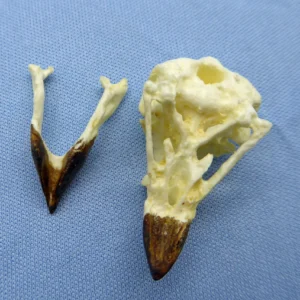

Medium Ground-Finch Skull Replica
$85.00
Examine avian evolution with this 1:1 scale skull cast. This model exhibits unique traits and island history. It provides a precise reference for the professional lab. Integrate this high-fidelity replica into your research or study collection today.
- Description
- Additional information
Description
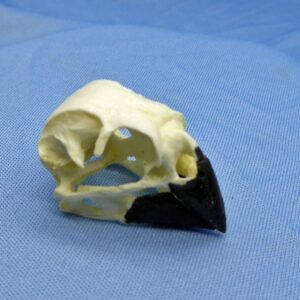
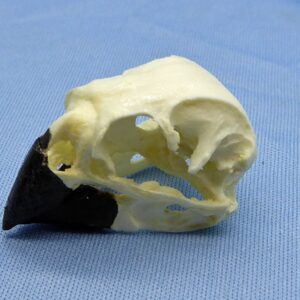
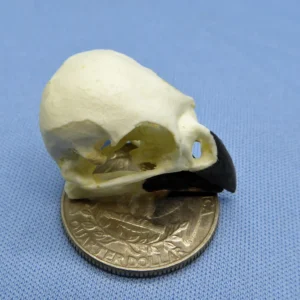
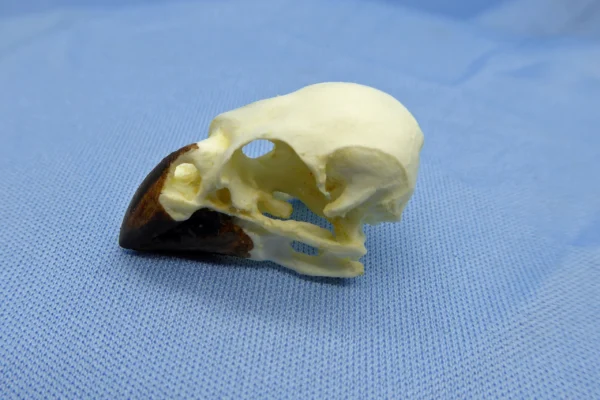
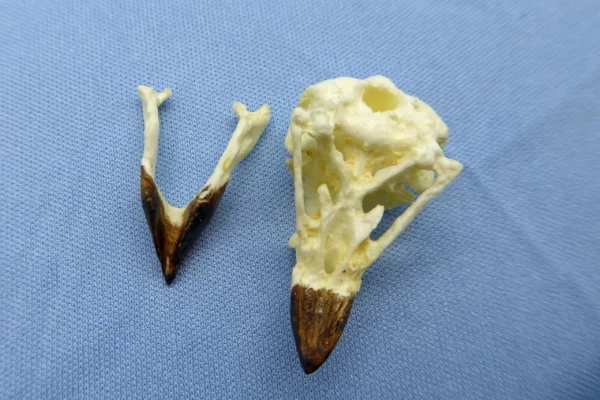
Medium Ground-Finch Skull Replica cast (Geospiza fortis). Measures 1.05″L x 0.65″W x 0.70″H. Museum-grade polyurethane resin cast from California Academy of Sciences specimen: CAS:ORN:66779; Geospiza fortis; Galapagos Islands, Ecuador, Santa Cruz Island, Kastdalen Farm; 25 Jan 1953; Field# RIB573B; Adult male. 2-part skull (separate cranium and mandible) 1:1 scale (life-size). Made in USA.
Medium Ground-Finch Skull Replica Dimensions
- Length: 1.05 inches (2.67 cm)
- Width: 0.65 inches (1.65 cm)
- Height (Cranium and Mandible): 0.70 inches (1.78 cm)
- Scale: 1:1 scale (life-size)
- Replica Weight (Net): 0.07 oz (2.0 g)
- Shipping Weight (Gross): 1.0 lb (453.6 g)
The Anatomy of the Medium Ground-Finch Skull Replica
The Medium Ground-Finch is a cornerstone of evolutionary study in the Galápagos. The California Academy of Sciences maintains specimens that showcase the rapid cranial adaptations required for a generalist diet. Below are the unique features of this highly variable ground finch.
Medium Ground-Finch Skull Replica Robust Crushing Morphology
In mature males such as the CAS specimen, the bill is stout and conical, providing a powerful tool for crushing seeds. Furthermore, the structural depth of the beak at the base allows the bird to exert significant pressure. Unlike the more specialized tree finches, this adaptation is optimized for ground-based foraging.
The Seed-Cracking Generalist
The skull features a reinforced mandible designed to crack hard seeds. This allows the bird to access high-energy nutrients even when soft food is scarce. While it is primarily a seed specialist, its robust beak consequently enables it to exploit larger, tougher food sources during severe drought cycles.
Multi-Functional Beak Adaptation
The cranium reveals a beak morphology that is uniquely suited for an unpredictable environment. This allows the finch to forage efficiently across both dry shrublands and evergreen forests. Additionally, the curved culmen offers the mechanical leverage necessary for prying into varied organic materials.
Medium Ground-Finch Evolutionary Significance
The deep, conical beak is a vital structural adaptation for its niche in the Galápagos archipelago. This distinct silhouette is frequently used as a benchmark in studies of natural selection. Notably, this specimen represents the mid-range phenotype of the Geospiza genus, serving as a primary link in the study of adaptive radiation.
Medium Ground-Finch Scientific Facts:
- Kingdom: Animalia
- Phylum: Chordata
- Class: Aves
- Order: Passeriformes
- Family: Thraupidae
- Genus: Geospiza
- Species: G. fortis
- Binomial name: Geospiza fortis Gould, 1837
- Conservation status: Least Concern (IUCN 3.1)
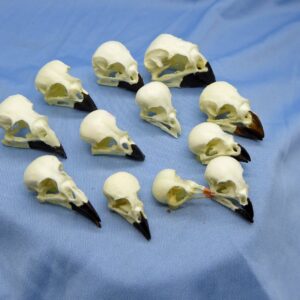
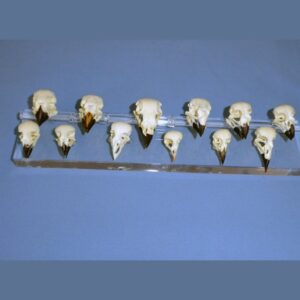
This collection of twelve Darwin’s Finches skull replicas provides a visual map of the species studied for over 40 years by Peter and Rosemary Grant on the island of Daphne Major. By comparing these specimens, one can observe the specific heritable beak traits that the Grants documented as they shifted in response to extreme weather events, demonstrating that natural selection can be observed in real-time.
Additional information
| Weight | 2.0 lbs |
|---|---|
| Dimensions | 1.05 × 0.65 × 0.70 in |