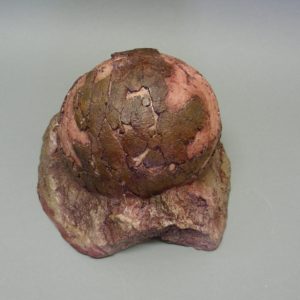
Oviraptor Dinosaur Egg Fossil Replica
$20.00
Oviraptor philoceratops is known from a single partial skeleton (specimen number AMNH 6517), as well as a nest of about fifteen eggs that have been referred to this species (AMNH 6508).
- Description
- Additional information
Description
Oviraptor dinosaur egg fossil replica measures 6.0″L x 2.24″W x 2.2″H. Oviraptor dinosaur egg fossil replica is museum quality-polyurethane resin cast of original specimen. Made in USA.
Oviraptor or Oviraptor philoceratops is a genus of small Mongolian theropod dinosaurs. Its name is Latin for ‘egg taker’ or “egg seizer”, referring to the fact that the first fossil specimen was discovered atop a pile of what was thought to be protoceratops eggs, and the specific name philoceratops means “lover of ceratopsians”, also given as a result of this find.
Oviraptor lived in the late Cretaceous period, during the late Campanian stage about 75 million years ago. Oviraptor philoceratops is known from a single partial skeleton (specimen number AMNH 6517), as well as a nest of about fifteen eggs that have been referred to this species (AMNH 6508).
Oviraptor was one of the most bird-like of the non-Avian theropod dinosaurs. Its rib cage, in particular, displayed several features that are typical of birds, including a set of processes on each rib that would have kept the rib cage rigid.
A relative of oviraptor called nomingia was found with a pygostyle, which is a set of fused vertebrae that would later help support the tail feathers of birds.
Skin impressions from more primitive oviraptorosaurs, like caudipteryx and protarchaeopteryx, clearly show an extensive covering of feathers on the body, feathered wings, and feathered tail fans. A tail fan is also indicated by the presence of a pygostyle in Nomingia, suggesting that this feature was widespread among oviraptorosaurs.
Additionally, the nesting position of the brooding citipati specimens implies the use of feathered wings to cover the eggs. Given the close anatomical similarity between these species and oviraptor it is highly likely that oviraptor had feathers as well.
The oviraptor has two long, well developed hind limbs, each had three clawed fingers that were used to hold, rip and tear their prey. The oviraptor had large eyes with bony rings and an unusual cranial crests along with a toothless beak.
Scientific classification:
- Kingdom: Animalia
- Phylum: Chordata
- Clade: Dinosauria
- Clade: Saurischia
- Clade: Theropoda
- Family: †Oviraptoridae
- Genus: †Oviraptor
- Type species: †Oviraptor philoceratops
- Conservation Status: Extinct
Shop More Museum Quality Dinosaur Fossils in Dinosaur Fossil Store
Additional information
| Weight | 2.0 lbs |
|---|---|
| Dimensions | 6.0 × 2.24 × 2.2 in |
| National Dinosaur Day - June 1st | National Dinosaur Day is celebrated on June 1st every year. It's a day to learn about dinosaurs, including what they looked like, what they ate, and how they became extinct. |