Pantropical Spotted Dolphin Skull Replica
$393.00
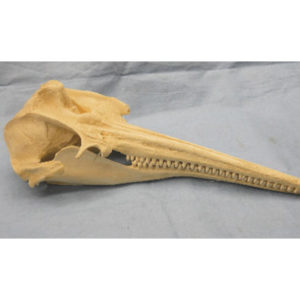
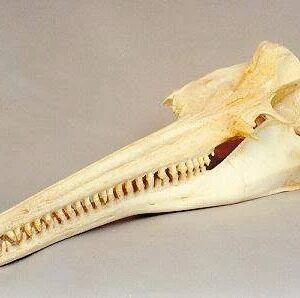
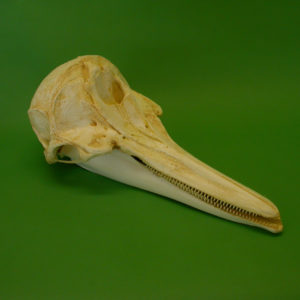
Pantropical spotted dolphin skull replica is 16.5 x 6.7 x 6.0 in. The Stenella attenuata skull is a museum-quality polyurethane resin cast of a CAS specimen.
- Description
- Additional information
Description
Pantropical spotted dolphin skull replica measures 16.5 x 6.7 x 6.0 inches. The Stenella attenuata skull is a museum-quality polyurethane resin cast of a California Academy of Sciences specimen. 2-part skull (separate cranium and mandible). 1:1 scale. Made in USA.
The pantropical spotted dolphin has a slender body and a long, narrow beak. A dark grey cape and a matching tall fin cover its back. Light spots cover the dark areas of the body on adult animals. The lips are white, and the dolphin has an average of 40 pairs of teeth per jaw. The undersides are pale grey with dark spots.
This species lives in all the temperate and tropical oceans of the world. The species faced big threats from tuna fishing nets in the past. In the 1990s, dolphin-friendly fishing methods saved millions of these animals. It is now one of the most abundant dolphin species in the world.
The dolphin varies significantly in size and color throughout its range. The coastal form is larger and has more spots than the offshore type. Immature individuals have no spots at all. Because of this, people sometimes confuse young dolphins with bottlenose dolphins. Populations around the Gulf of Mexico can also stay spot-free until adulthood.
In the Atlantic Ocean, it gets confused with the Atlantic spotted dolphin. The upper and lower jaws have a dark color but separate thin, white lips. The sides have three distinct bands of color. The lightest band sits at the bottom, followed by a thin grey strip in the middle.
Scientific Classification
- Kingdom: Animalia
- Phylum: Chordata
- Class: Mammalia
- Order: Artiodactyla
- Infraorder: Cetacea
- Family: Delphinidae
- Genus: Stenella
- Species: S. attenuata
- Binomial Name: Stenella attenuata (Gray, 1846)
- Conservation status: Least Concern (IUCN 3.1)
Spotty, the Pantropical spotted dolphin skull replica, is going whale watching off the coast in Santa Cruz, California. She is excellent at spotting whales. She is bringing her Sony camera to take pictures of all the whales they see that day.
Flipper, the bottlenose dolphin skull replica, is friends with all the whales and has asked them to put on a show for Spotty. He loves Spotty and wants her to have the time of her life whale watching today.
Becky, the short-beaked common dolphin skull replica, bought a new bikini to wear while whale watching. It’s really cute and is a Hawaiian print.
Amy, the Amazon River dolphin skull replica, is also very good at spotting whales because she is so tall. Behind her back she hears people calling her an Amazon woman because of her height.
Additional information
| Weight | 30.0 lbs |
|---|---|
| Dimensions | 16.5 × 6.7 × 6.0 in |
| National Dolphin Day - April 14th | Each year on April 14th, National Dolphin Day recognizes the social and intelligent mammals of the water. |