
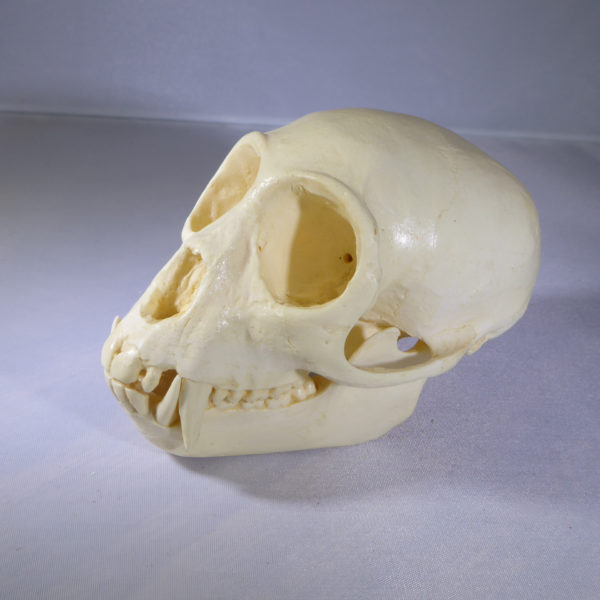

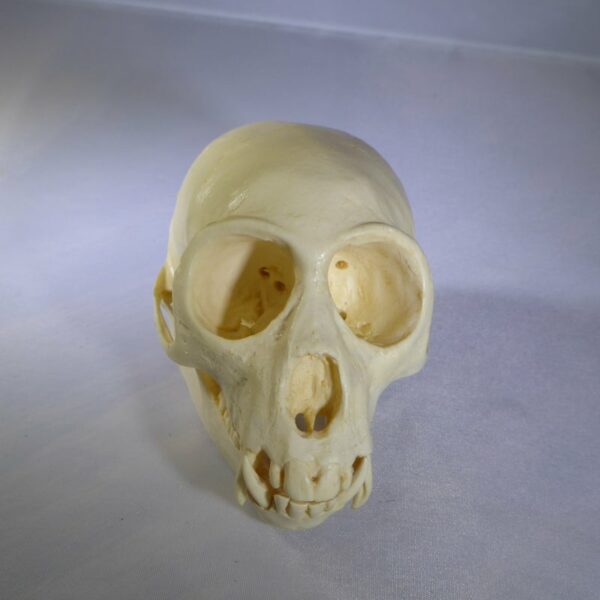


Red-eared Monkey Skull Replica
$121.00
Red-eared monkey skull replica is 2.0 x 1.6 x 1.4 in. The Cercopithecus erythrotis skull is a museum-quality polyurethane resin cast of a CAS specimen. 1:1 scale. Made in USA.
- Description
- Additional information
Description
Red-eared monkey skull replica measures 2.0 x 1.6 x 1.4 inches. The Cercopithecus erythrotis skull is a museum-quality polyurethane resin cast of a California Academy of Sciences specimen. 2-part skull (separate cranium and mandible). 1:1 scale. Made in USA.
The red-eared monkey comes from central Africa. Their geographic range includes Cameroon, Equatorial Guinea, and Nigeria. They live in subtropical and tropical moist lowland forests.
They also live in primary and secondary sub-montane moist forests. Sometimes they live close to humans on Bioko Island. People call them russet-eared guenon.
This small monkey has a very colorful look with distinct facial markings. They have blue fur around their eyes and a brick-red nose and ears. They have yellow cheeks.
Scientific Classification
- Kingdom: Animalia
- Phylum: Chordata
- Class: Mammalia
- Order: Primates
- Suborder: Haplorhini
- Infraorder: Simiiformes
- Family: Cercopithecidae
- Genus: Cercopithecus
- Species: C. erythrotis
- Binomial name: Cercopithecus erythrotis
- Conservation status: Vulnerable
Rudy, the red-eared monkey skull replica, is a make-up artist for Hollywood stars. He is a perfectionist and all the stars have him apply their make-up.
He has trained Mary, the mona monkey female skull replica, to fill his shoes while he is on vacation.
Scott, the sooty mangabey male skull replica, serves champaign to all the stars so they are nice and relaxed while having their make-up applied.
Patrick, the patas monkey male skull replica, is in charge of playing the soft relaxing music.
Additional information
| Weight | 3.0 lbs |
|---|---|
| Dimensions | 2.0 × 1.6 × 1.4 in |
| International Monkey Day - December 14th | International Monkey Day has been created to celebrate monkeys on December 14th, as well as “all things simian,” which includes lemurs, tarsiers, apes, and other non-human primates. It is a great day when it comes to raising awareness about different types of monkeys and primates around the world, as well as the issues they face and how we can help them. |


