


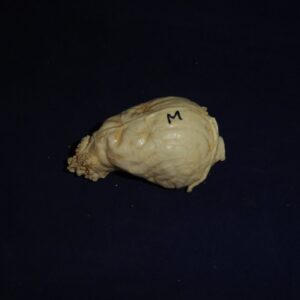
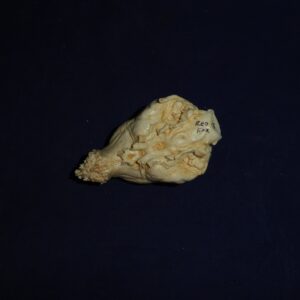

Red Fox Brain Replica
$26.00
The red fox has a relatively large brain compared to other canids, which likely contributes to its incredible ability to adapt to diverse environment.
- Description
- Additional information
Description
Red Fox Brain Replica for Evolutionary Study
Red fox brain replica measures 2.9 inches in length. Vulpes vulpes is museum-quality polyurethane resin cast from CAS specimen. 1:1 scale. Made in USA.
Etymology and Terminology
The term fox finds its roots in Old English and Proto-Germanic words. These early names usually referred to thick hair or bushy tails. Specifically, the scientific name Vulpes comes from the Latin word for fox. This gives us modern terms like vulpine. Within a family group, people call males tods or dogs.
In contrast, they call females vixens and refer to the young as kits or cubs. Because it is the only fox native to Western Europe, British English speakers often call it simply “the fox.”
Evolutionary History
The red fox is a more specialized form of the Vulpes genus than its cousins. While it is not a pure carnivore, its skull shows a facial area highly adapted for hunting.
Evolution favored a larger size for this species. Consequently, the adult cranium displays fewer juvenile traits than other foxes. This development helped the animal become a dominant predator across many different landscapes.
Human Association and Domestication
The red fox shares a very long history with human civilization. For many centuries, humans harvested them for the fur trade. They also appear frequently in global folklore and mythology. Because they are too small to threaten people, they often live in suburban areas.
Interestingly, researchers in Russia have even started domesticating them. This unique project eventually resulted in the domesticated silver fox.
Scientific Classification
- Kingdom: Animalia
- Phylum: Chordata
- Class: Mammalia
- Order: Carnivora
- Family: Canidae
- Genus: Vulpes
- Species: V. vulpes
- Binomial name: Vulpes vulpes (Linnaeus, 1758)
- Conservation status: Least concern (IUCN 3.1)
Conduct a Comparative Dietary Analysis
Displaying this red fox brain model alongside its most common prey provides a technical look at the North American food chain. To build a professional research set, pair this brain with a red fox skull replica, an American crow skull replica, and a meadow vole skull replica. This grouping allows you to analyze the hunter’s neural structure against the anatomy of the birds and small mammals it must outsmart.
By placing the fox beside the american crow skull, you can demonstrate the intelligence battle between a clever carnivore and a social bird. The addition of the meadow vole skull and an eastern cottontail rabbit skull completes the data on grassland ecology. These museum-quality replicas turn your exhibit into a sophisticated study on how different species evolved unique cranial structures to either capture prey or escape detection. These museum-quality replicas allow you to investigate how diverse species developed specific cranial features to exploit different North American food sources.
Additional information
| Weight | 2.0 lbs |
|---|---|
| Dimensions | 2.6 in |


