

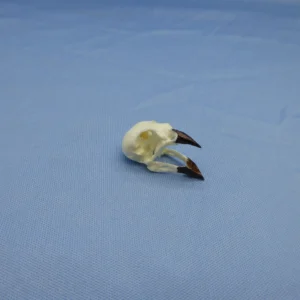
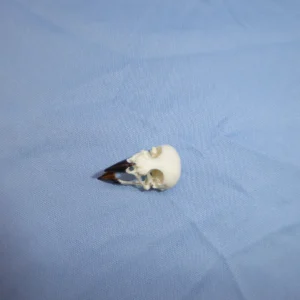
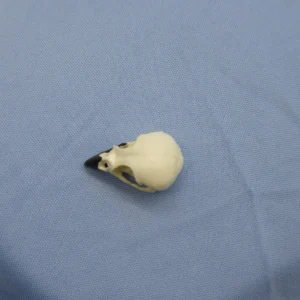
Small Ground-Finch Skull Replica
$85.00
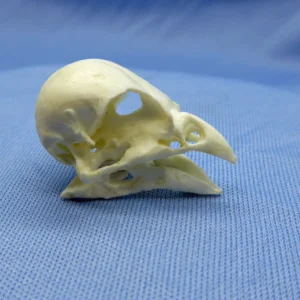
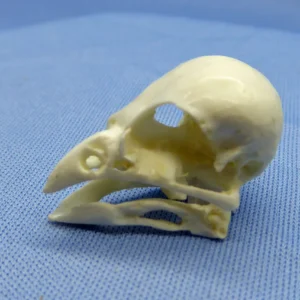
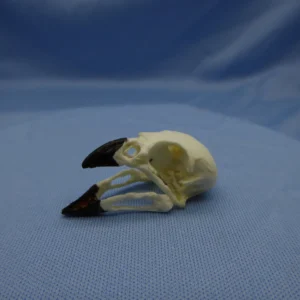
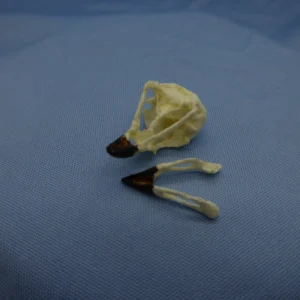
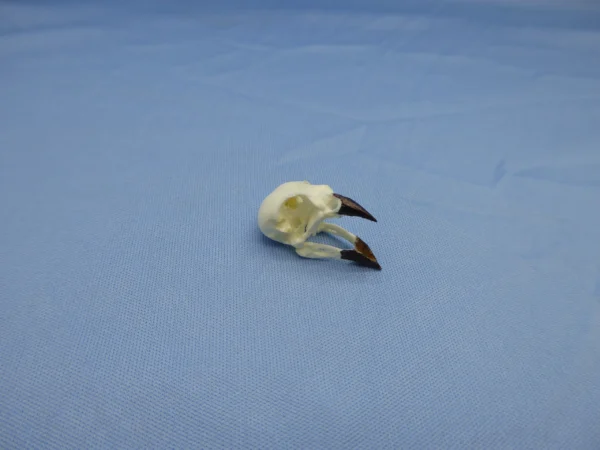
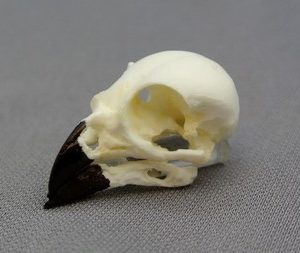
Small Ground-Finch Skull Replica is a museum-quality Small Ground-Finch (Geospiza fuliginosa) skull replica cast from CAS:ORN:66753 adult male specimen. Includes separate cranium and mandible.
- Description
- Additional information
Description
Small Ground-Finch Skull Replica is museum-grade polyurethane resin cast from CAS:ORN:66753 specimen. Geospiza fuliginosa 1:1 scale (life-size). Measures 0.85″L x 0.55″W x 0.50″H. California Academy of Sciences; Galápagos Islands, Ecuador, Santa Cruz Island, Academy Bay; 20 Jan 1953; Field# RIB549B; Adult male. 2-part skull (separate cranium and mandible). 1:1 scale (life-size). Made in USA.
Small Ground-Finch Skull Replica Dimensions
- Length: 0.85 inches (2.16 cm)
- Width: 0.55 inches (1.40 cm)
- Height (Cranium and Mandible): 0.50 inches (1.27 cm)
- Scale: 1:1 scale (life-size)
- Replica Weight (Net): 0.05 oz (1.4 g)
- Shipping Weight (Gross): 2.0 lbs (907.2 g)
The Anatomy of the Small Ground-Finch Skull Replica
The Small Ground-Finch is the smallest of the ground-dwelling finches in the Galápagos archipelago. The California Academy of Sciences maintains specimens that showcase the delicate yet efficient cranial adaptations required for a generalist diet. Specifically, the following sections detail the unique features of this ubiquitous species.
Small Ground-Finch Skull Replica Delicate Crushing Morphology
In mature males such as the CAS specimen, the bill is relatively short and conical. Furthermore, this structure provides a precise tool for crushed small, soft seeds. Unlike the massive beaks of its larger ground-dwelling relatives, this morphology is optimized for processing smaller food items with high frequency.
The Generalist Forager
The skull features a sharp-pointed bill designed for a versatile diet. Consequently, this allows the bird to forage efficiently for small seeds, insects, and even parasites found on the skin of giant tortoises and iguanas. While it is primarily a seed-eater, its agile beak also enables it to exploit diverse food sources across various island habitats.
Multi-Functional Beak Adaptation
The cranium reveals a beak morphology that is notably smaller and less deep at the base than the Medium Ground-Finch. In addition, this size allows the finch to occupy a unique ecological niche by focusing on food resources that larger finches ignore. The fine-tuned jaw structure is specialized for precision rather than brute crushing force.
Small Ground-Finch Evolutionary Significance
The pointed, conical beak is a vital structural adaptation for its role as an opportunistic generalist. Notably, this distinct silhouette is frequently used in studies of adaptive radiation to show the “entry-level” size for ground finch morphology. This specimen represents one of the most common and successful species within the Geospiza genus.
Small Ground-Finch Scientific Facts:
- Kingdom: Animalia
- Phylum: Chordata
- Class: Aves
- Order: Passeriformes
- Family: Thraupidae
- Genus: Geospiza
- Species: G. fuliginosa
- Binomial name: Geospiza fuliginosa Gould, 1837
- Conservation status: Least Concern (IUCN 3.1)
While the Small Ground-Finch features a stout, conical beak for crushing small seeds, the Vegetarian Finch possesses a unique, parrot-like bill specifically adapted for stripping buds, blossoms, and leaves from Galápagos foliage.
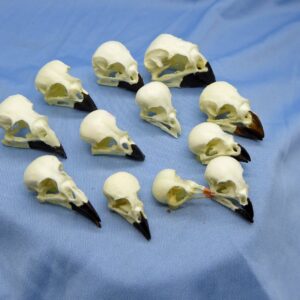
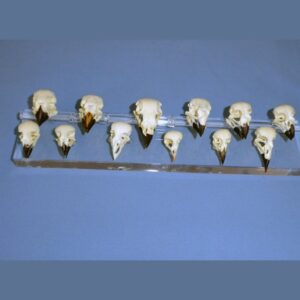
This Darwin’s Finch twelve-piece set serves as a primary reference for biomechanical studies investigating the relationship between cranial morphology and bite force. By examining the varied beak depths and widths, researchers can model the mechanical trade-offs required for different survival strategies, from the high force needed to crack seeds to the precision required for insectivory.
Additional information
| Weight | 2.0 lbs |
|---|---|
| Dimensions | 0.85 × 0.55 × 0.50 in |