
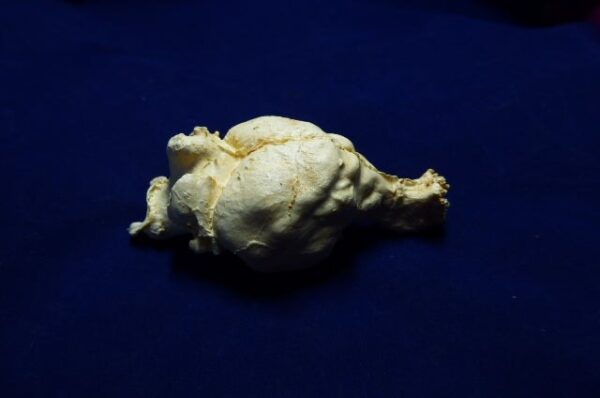
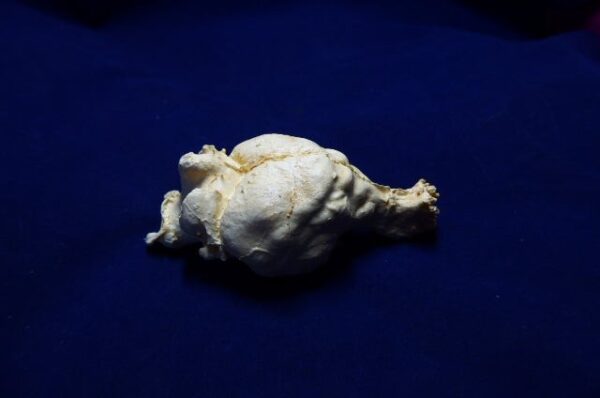
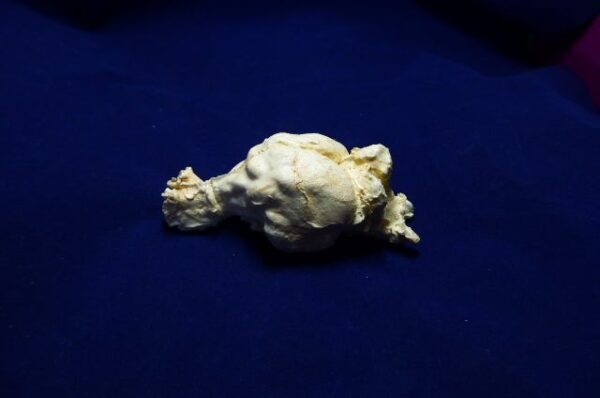
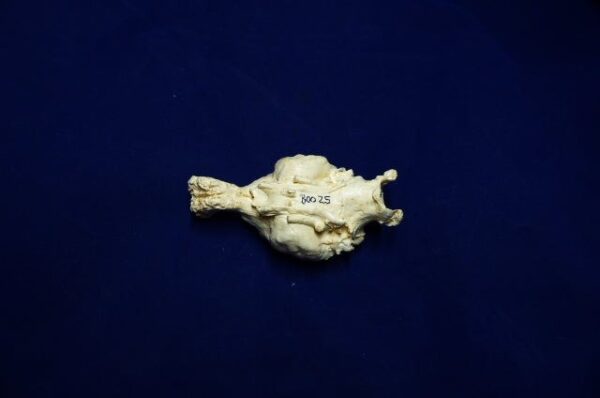
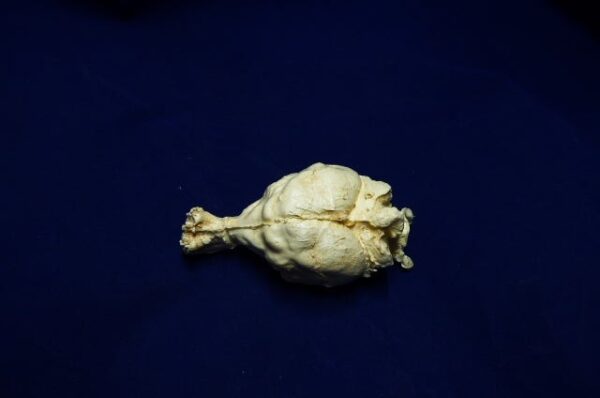
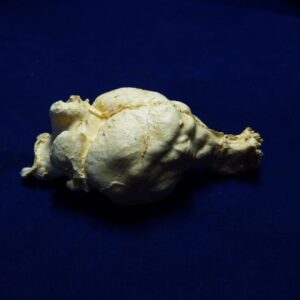
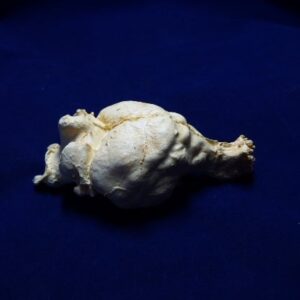
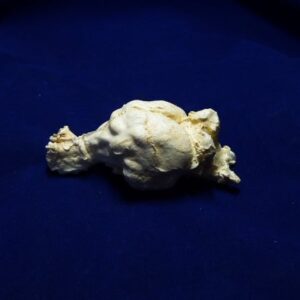
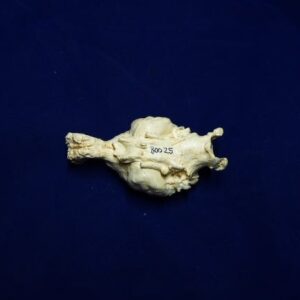
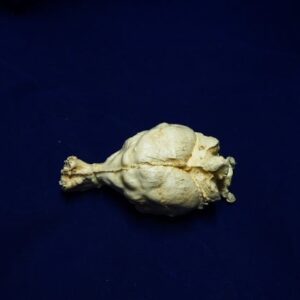
Tasmanian Wolf Brain Replica
$32.00
The Thylacine (Thylacinus cynocephalus), also commonly known as the Tasmanian Tiger or Tasmanian Wolf, is an extinct carnivorous marsupial that was native to the Australian mainland and the islands of Tasmania and New Guinea.
- Description
- Additional information
Description
Tasmanian Wolf Brain Replica measures 13.5″L x 1.5″W x 1.5″H. Tasmanian Wolf Brain Replica is museum quality polyurethane cast. Made in USA. Our precise brain can be used as a teaching tool, museum brain exhibit, home décor brain, or office décor brain.
The Tasmanian Wolf or Thylacinus cynocephalus, now extinct, is one of the largest known carnivorous marsupials, evolving about 4 million years ago.
The last known live animal was captured in 1933 in Tasmania. It is commonly known as the Tasmanian tiger or Thylacine because of its striped lower back and its canid-like characteristics. It was native to Tasmania, New Guinea, and the Australian mainland.
The Tasmanian Wolf or Thylacinus cynocephalus was relatively shy and nocturnal, with the general appearance of a medium-to-large-size dog, except for its stiff tail and abdominal pouch similar to a kangaroo, and dark transverse stripes that radiated from the top of its back, reminiscent of a tiger.
The Tasmanian Wolf or Thylacinus cynocephalus was a formidable apex predator, though exactly how large its prey animals were is disputed.
Because of convergent evolution it displayed a form and adaptations similar to the tiger and wolf of the Northern Hemisphere, even though not related. Its closest living relative is either the Tasmanian devil or the Numbat.
The Tasmanian Wolf or Thylacinus cynocephalus was one of only two marsupials to have a pouch in both sexes: the other is the water opossum. The pouch of the male thylacine served as a protective sheath covering the external reproductive organs.
The Tasmanian Wolf or Thylacinus cynocephalus had become extinct on the Australian mainland before British settlement of the continent, but it survived on the island of Tasmania along with several other endemic species, including the Tasmanian devil.
Intensive hunting encouraged by bounties is generally blamed for its extinction, but other contributing factors may have been disease, the introduction of dogs, and human encroachment into its habitat.
Scientific classification
Domain: Eukaryota
Kingdom: Animalia
Phylum: Chordata
Class: Mammalia
Infraclass: Marsupialia
Order: Dasyuromorphia
Family: †Thylacinidae
Genus: †Thylacinus
Species: †T. cynocephalus
Binomial name: †Thylacinus cynocephalus
Additional information
| Weight | 7 lbs |
|---|---|
| Dimensions | 13.5 × 1.5 × 1.5 in |