
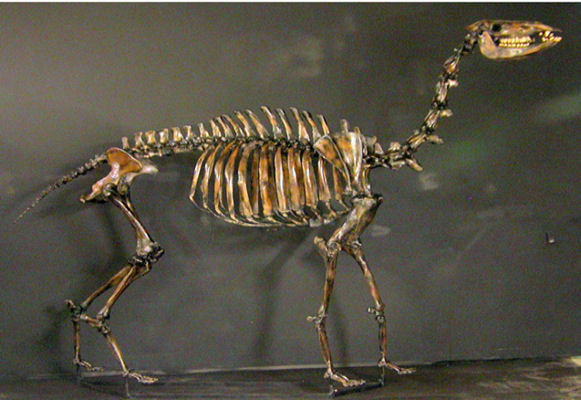

Yesterday’s Camel Skeleton Cast Replica
$35,700.00
Yesterday’s Camel is more closely related to the Old World dromedary and Bactrian camel than the New World alpaca, guanaco, llama, and vicuña, making it a true camel of the Camelini tribe.
- Description
Description
Yesterday’s Camel Skeleton Cast Replica measures 93 inches. Yesterday’s Camel Skeleton cast is museum-quality polyurethane cast. Made in the USA. Polyurethane cast of an original from the Page Museum, Natural History Museum of Los Angeles County Foundation specimen. Camelopes hesternus; Plestocene Rancholabrea. Western North America. Shipping quote, please call 509-951-3557.
Skeleton measures 128″ from Tip of Tail to Tip of Skull, 24″ Wide from Patella to Patella, 77″ from Foot to Shoulder or highest vertebrae. Total height of Skeleton is 93″. The metal stand measures 19 1/2″ wide, 68 1/4″ long and 2″ in height. Wheels can be added to stand. Skeleton ships with nine “snap together” pieces: Skull, Neck, Rib Cage, Pelvic with tail, and 4 legs.
Yesterday’s Camel or Camelops is an extinct genus of camels that lived in Western North America, ranging from Alaska to Mexico, from the middle Pliocene to the end of the Pleistocene.
It is more closely related to the Old World dromedary and Bactrian camel than the New World alpaca, guanaco, llama, and vicuña, making it a true camel of the Camelini tribe.
The genus Camelops first appeared during the middle Pliocene (about 4.0–3.2 million years ago (Mya) in southern North America and became extinct at the end of the Pleistocene (around 10,000 years ago).
Despite the fact that camels are popularly associated with the deserts of Asia and Africa, the family Camelidae, which comprises camels and llamas, originated in North America during the middle Eocene period, at least 44 Mya.
Both the camel and horse families originated in the Americas and migrated into Eurasia via the Bering Strait.
Camels first appeared in North American about 50 million years ago and about 7 million years ago camels migrated to Asia where they evolved into the modern Bactrian and dromedary camels. About 2 million years ago, camels migrated South America where they evolved into llamas.
During the Pleistocene, six genera of camelids were in North America. The largest of these was the Nebraska Camel (Titanotylopus nebraskensis) which weighed more than a ton and was about 12 feet tall at the shoulder.
Yesterday’s Camel also called the Western Camel, evolved about 300,000 years ago and went extinct between 12,600 and 10,800 years ago.
Yesterday’s Camel was more closely related to the present-day alpaca and llama branch of the camel family tree. Yesterday’s Camel was one of the true camels—the ancestors of present-day domestic camels known from the deserts around the world.
The skull of a Yesterday’s Camel specimen was found above the Glenns Ferry Formation in present-day Idaho in a thick layer of coarse gravel known as the Tauna Gravels. Above this layer of gravel is another layer of fine river channel sands, where the skull was found.
Scientific Classification:
- Kingdom: Animalia
- Phylum: Chordata
- Class: Mammalia
- Order: Artiodactyla
- Family: Camelidae
- Tribe: Camelini
- Genus: †Camelops
The 7-foot-tall Yesterday’s Camel represents the primary megaherbivore prey that once sustained the powerful, ambush-ready anatomy of the Saber-toothed Cat within the ancient La Brea ecosystem.