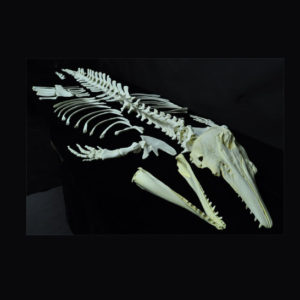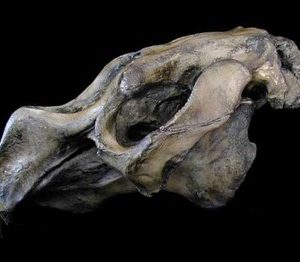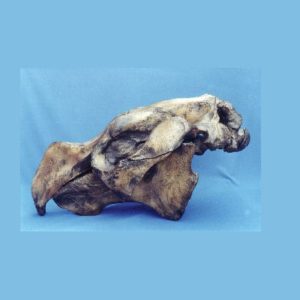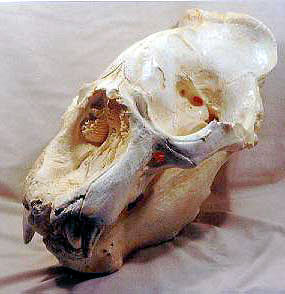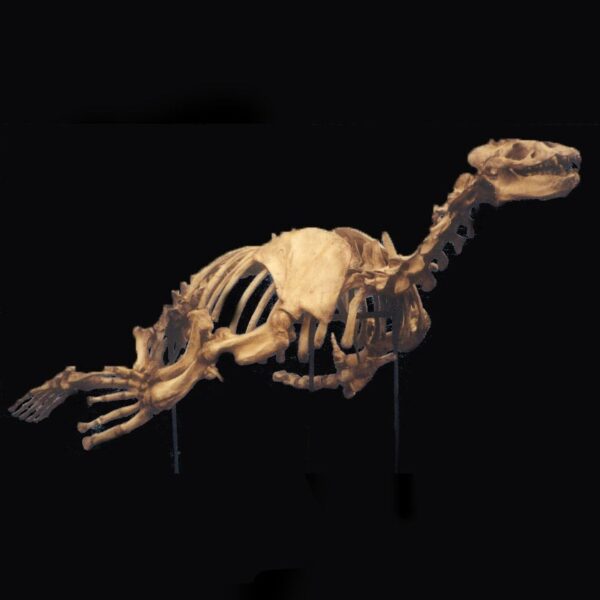

Allodesmus kelloggi Unmounted Skeleton Replica
$16,980.00
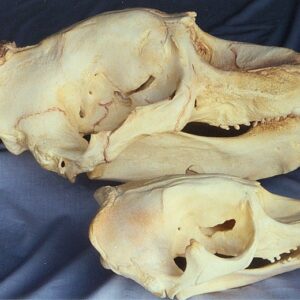
Its massive eye sockets suggest it was a deep-diver that relied on sight to hunt in low-light conditions, much like the modern elephant seal’s traits.
- Description
- Additional information
Description
Allodesmus kelloggi Unmounted Skeleton Replica for Marine Biology
Allodesmus kelloggi unmounted skeleton replica measures 120 inches or 10.0 feet. Allodesmus kelloggi skeleton is museum-quality polyurethane resin cast from Buena Vista Museum of Natural History specimen. 1:1 scale. Made in USA.
Important Production and Shipping Notice
This museum-quality replica is made to order. It requires additional time for casting. Please call our customer service team at 1-509-951-3557 to check current availability and turnaround times. Additional shipping charges may apply. Please contact our sales team for a personalized shipping quote to your location.
Records show a complex evolutionary history that could not otherwise be inferred from their extant relatives, including multiple radiations and iterative ecomorphological specializations among different lineages, many of which are extinct.
The fossil record of Allodesmus kelloggi or Allodesmus uraiporensis pinnipeds (seals, fur seals and walruses) is globally distributed, spanning from the late Oligocene to the Holocene.
Scientific Classification
- Kingdom: Animalia
- Phylum: Chordata
- Class: Mammalia
- Order: Carnivora
- Clade: Pinnipedia
- Family: †Desmatophocidae
- Genus: †Allodesmus
- Conservation Status: Extinct
To counteract the buoyancy of saltwater, the Steller’s sea cow, California elephant seal, and the beluga whale, along with the allodesmus evolved extremely dense, heavy bones. This acted as a natural “divers weight belt,” allowing them to feed on the seafloor without constantly fighting to stay submerged.
Additional information
| Weight | 125.0 lbs |
|---|---|
| Dimensions | 120 in |
| World Sea Lion Day - May 30th | World Sea Lion Day is on May 30th. Together with fur seals, sea lions belong to the family Otariidae, characterized by external ear flaps. They are principally found in large colonies on rocky and sandy shores in Pacific waters. The largest kind is the Steller's sea lion, which can weigh up to 1,000 kg! As they rely on water to feed and cool off, sea lions are vulnerable to the effects of climate change and ocean currents, affecting prey abundance. Besides, they are also victims of bycatch in fisheries. As a result, three species are considered endangered: the Australian sea lion, Galápagos sea lion, and New Zealand sea lion. |
| Disarticulated Skeleton | Skeleton is Disarticulated – Seperate bones, skull and jaw. |
| Skeleton Mount | Disarticulated Skeletons do not include the metal mount. |