
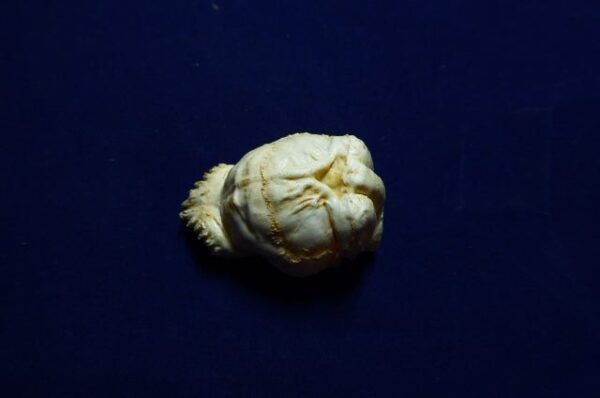
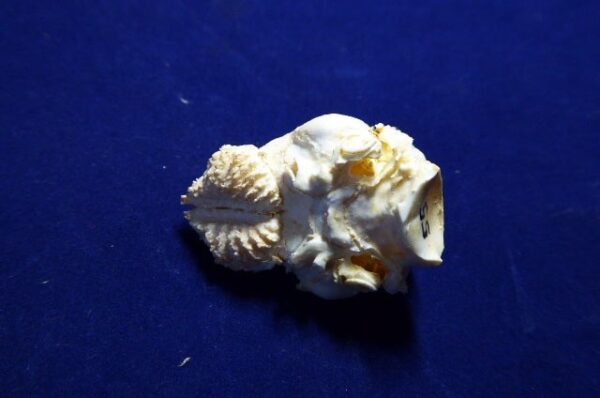
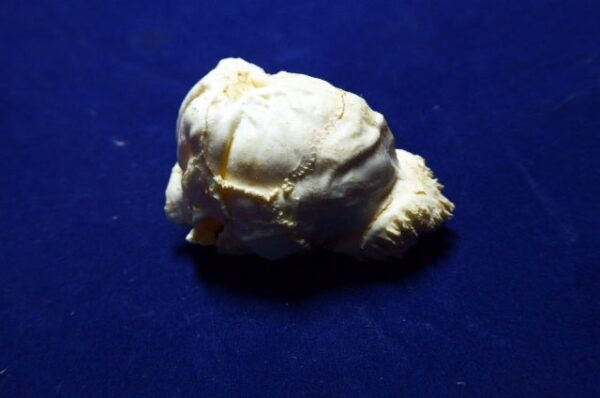
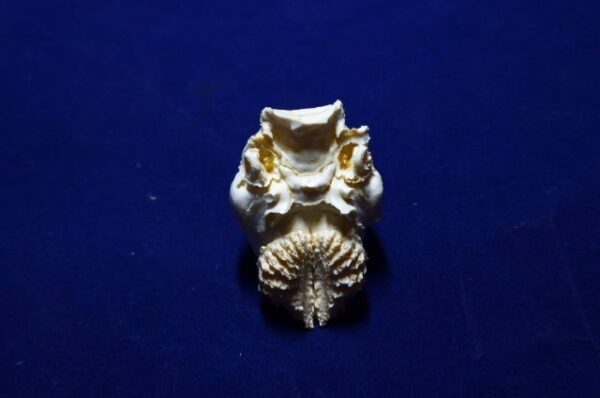
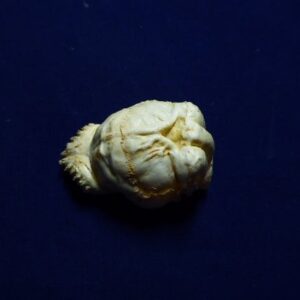
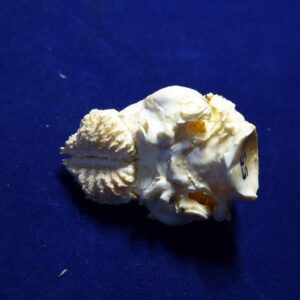
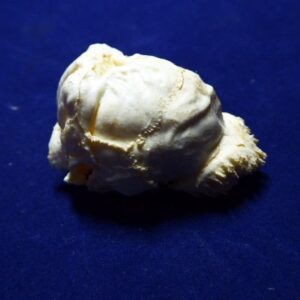
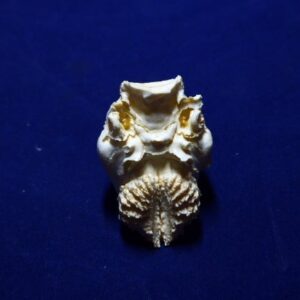
Long-nosed Armadillo Brain Replica
$26.00
Long-nosed armadillos have specialized brains with large olfactory structures and a small neocortex, showing convergent evolution for hunting prey.
- Description
- Additional information
Description
Long-nosed Armadillo Brain Replica for Anatomical Study
Long-nosed armadillo brain replica measures 1.6 x 1.1 x 1.0 inches. Dasypus novemcinctus is museum-quality polyurethane resin cast from CAS specimen. 1:1 scale. Made in USA.
Characteristics of the Dasypus Genus
Specifically, Dasypus represents the only living genus within the family Dasypodidae. Most people recognize these species as long-nosed or naked-tailed armadillos. They thrive across South, Central, and North America. Moreover, they also inhabit the Caribbean islands of Grenada, Trinidad, and Tobago.
These animals prefer a solitary lifestyle. Additionally, they remain primarily nocturnal to avoid extreme temperatures and predators. They live in diverse habitats ranging from thick brush to open grasslands where they mainly eat insects.
The nine-banded armadillo is the most common member of this group. Consequently, scientists frequently use this species to study leprosy. This occurs because the nine-banded armadillo possesses a unique biological ability to contract the disease.
Unique Anatomical Armor
These mammals belong to the superorder Xenarthra. They are famous for a hard armor-like shell called a carapace. Their ossified dermal plates form a series of six to eleven movable bands. Furthermore, leathery keratinous skin covers these bands to protect the body.
A thin epidermal layer separates each armor band to ensure flexibility. Consequently, joints in the shell allow the animal to move with ease. However, the face and underside lack this bony covering and feature small bunches of hair instead.
Scientific Classification
- Kingdom: Animalia
- Phylum: Chordata
- Class: Mammalia
- Superorder: Xenarthra
- Order: Cingulata
- Family: Dasypodidae
- Subfamily: Dasypodinae
- Genus: Dasypus Linnaeus, 1758
- Type species: Dasypus novemcinctus Linnaeus, 1758
- Conservation status: Least concern (IUCN 3.1)
Explore Xenarthran Evolutionary Morphology
Additional information
| Weight | 2.0 lbs |
|---|---|
| Dimensions | 1.6 × 1.1 × 1.0 in |


