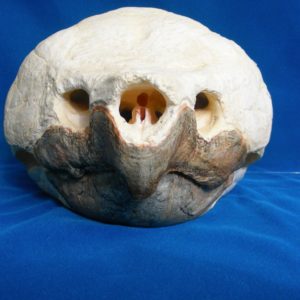
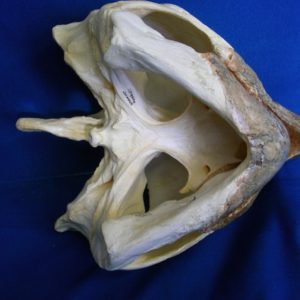
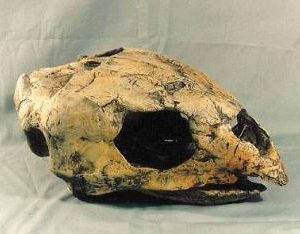
Desert Tortoise Skull Replica
$66.00
Tortoises show very strong site fidelity, and have well-established home ranges where they know where their food, water, and mineral resources are.
- Description
- Additional information
Description
Desert tortoise skull replica measures 2.0 inches. The desert tortoise skull is a museum-quality polyurethane resin cast. 2-part skull (separate cranium and jaw). Made in USA.
The desert tortoise is a species of tortoise native to the Mojave and Sonoran Desert of the southwestern United States and northwestern Mexico. It is also known as the Mojave desert tortoise and Agassizs desert tortoise.
It can live from 50 to 80 years. The desert tortoise is an herbivore (plant eater). It eats grasses, herbs, and a wide variety of desert plants.
The desert tortoise grows slowly and generally has a low reproductive rate. It spends most of its time in burrows, rock shelters, and pallets to regulate body temperature and reduce water loss. It is most active after seasonal rains and is inactive during most of the year.
This inactivity helps reduce water loss during hot periods, whereas winter brumation facilitates survival during freezing temperatures and low food availability. Gopherus agassizii can tolerate water, salt, and energy imbalances on a daily basis, which increases their lifespans.
Temperature strongly influences their activity level. Although desert tortoises can survive body temperatures from below freezing to over 104 degrees F, most activity occurs at temperatures from 79 to 93 degrees F.
The influence of temperature is reflected in daily activity patterns, with desert tortoises often active late in the morning during spring and fall, early in the morning and late in the evening during the summer, and occasionally becoming active during relatively warm winter afternoons. The activity generally increases after rainfall.
Although they spend the majority of their time in shelter, movements of up to 660 feet per day are common.
The common, comparatively short-distance movements presumably represent foraging activity, traveling between burrows, and possibly mate-seeking or other social behaviors. Long-distance movements could potentially represent dispersal into new areas or use of peripheral portions of the home range.
Scientific classification:
- Kingdom: Animalia
- Phylum: Chordata
- Class: Reptilia
- Order: Testudines
- Suborder: Cryptodira
- Superfamily: Testudinoidea
- Family: Testudinidae
- Genus: Gopherus
- Species: G. agassizii
- Binomial name: Gopherus agassizii (Cooper, 1863)
- Conservation status: Critically Endangered (IUCN 3.1)
Related reptiles:
If you enjoy this specimen, you may also like the Matamata turtle, Galapagos tortoise, or the Aldabra giant tortoise. Shop for more museum-quality replicas in our reptile store.
Additional information
| Weight | 2.5 lbs |
|---|---|
| Dimensions | 2.0 × 1.5 × 1.0 in |
| World Turtle Day - May 23rd | World Turtle Day is celebrated annually on May 23rd to raise awareness about the importance of protecting turtles and tortoises. The day was established in 2000 by American Tortoise Rescue. |