

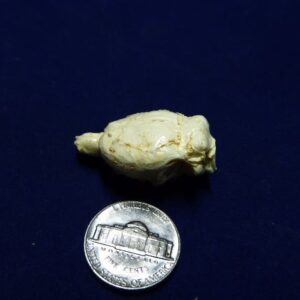
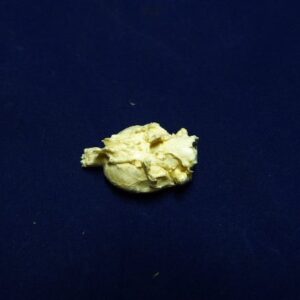


Muskrat Brain Replica
$26.00
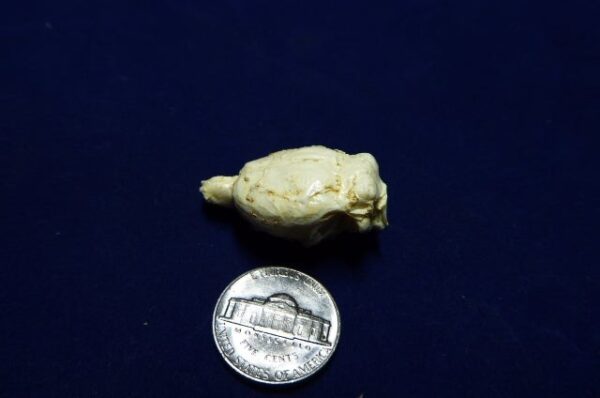
Muskrat brain replica measures 1.4 x 0.8 x 0.6 inches. Ondatra zibethicus brain is museum-quality polyurethane resin cast from CAS specimen. 1:1 scale.
- Description
- Additional information
Description
Muskrat Brain Replica for Neuroscience
Muskrat brain replica measures 1.4 x 0.8 x 0.6 inches. Ondatra zibethicus brain is museum-quality polyurethane resin cast from CAS specimen. 1:1 scale. Made in USA.
Biology of the Muskrat
The muskrat stands as a medium-sized semiaquatic rodent native to North American wetlands. It represents the only species within the genus Ondatra. While they are famous in the Americas, these animals now live in parts of Europe and Asia because of human introduction.
They play a massive role in their ecosystems because they physically alter the vegetation around them. Consequently, scientists view them as an essential resource for studying environmental changes in marshlands.
Aquatic Habits and Diet
Muskrats spend most of their time in the water and are well suited for this life. Specifically, they can swim underwater for twelve to seventeen minutes at a time.
They are most active at night or near dawn and dusk. Usually, they feed on cattail and other aquatic vegetation. They do not store food for the winter. Instead, they sometimes eat the insides of their own push-ups.
Additionally, they eat small animals such as freshwater mussels, frogs, crayfish, and fish. They always follow specific trails they make in swamps and ponds. When the water freezes, they continue to follow these trails under the ice.
Scientific Classification
- Kingdom: Animalia
- Phylum: Chordata
- Class: Mammalia
- Order: Rodentia
- Family: Cricetidae
- Subfamily: Arvicolinae
- Genus: Ondatra
- Species: O. zibethicus
- Binomial name: Ondatra zibethicus (Linnaeus, 1766)
- Conservation status: Least concern (IUCN 3.1)
Analyze Niche Evolution in Marshlands
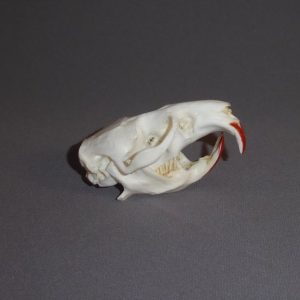
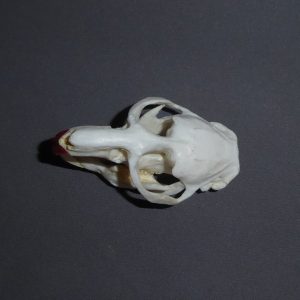
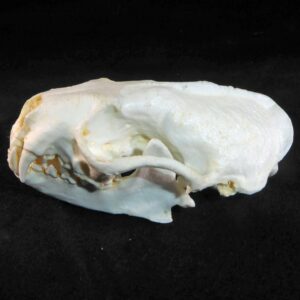
Displaying a muskrat skull replica alongside this brain model offers a complete look at specialized wetland anatomy. You can expand this study by adding an American mink skull replica and a North American river otter skull replica to show real-world marshland competition. This grouping allows you to examine the physical diversity among species that share the same North American habitats.
While the muskrat represents a successful herbivorous lineage, the mink skull highlights the anatomical traits of an agile, small-bodied predator. Adding the river otter skull replica completes the story by showing how a larger carnivore dominates the same waterways. These museum-quality replicas turn your collection into a high-level scientific study on how North American mammals adapted to a life between land and water.
Additional information
| Weight | 2.0 lbs |
|---|---|
| Dimensions | 1.4 × 0.8 × 0.6 in |