

Pygmy Slow Loris Skull Replica
$79.00
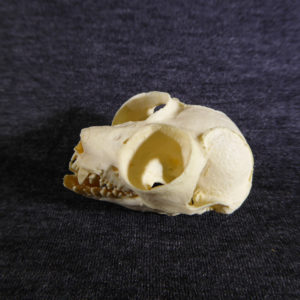
This tiny native is from east of the Moking River. They are notcturnal as evidenced by thier large eye sockets and live an arboreal lifestyle and have strong bonds with their piers.
- Description
- Additional information
Description
Pygmy slow loris skull replica measures 2.0 x 1.3 x 1.1 inches. Nycticebus pygmaeus skull is a museum-quality polyurethane cast from a California Academy of Sciences specimen. Two-part skull (separate cranium and mandible). 1:1 scale. Made in USA.
The pygmy slow loris skull highlights the skeletal modifications of a early primate. This cast shows the high-cusped molars that allow the animal to chew through tough chitin and vegetation. Because the species exhibits a cautious climbing style, the skull base is reinforced for better muscular anchoring.
The zygomatic arches flare outward to provide ample space for the muscles involved in deep-pressure biting. Also, the mastoid region houses complex structures that assist with sound localization. These features enable the anima to navigate dense vegetation without relying on speed.
Scientific Classification
- Kingdom: Animalia
- Phylum: Chordata
- Class: Mammalia
- Order: Primates
- Suborder: Strepsirrhini
- Family: Lorisidae
- Genus: Nycticebus
- Species: N. pygmaeus
- Binomial name: Nycticebus pygmaeus
- Conservation status: Endangered
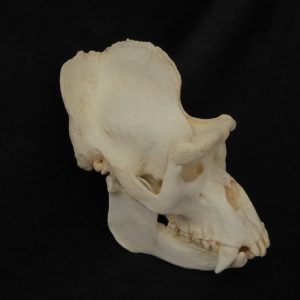
Utilize this pygmy slow loris skull replica to demonstrate the extreme diversity within the primate order. One might compare the anatomical details of this specimen with the bushbaby skull replica to discuss the evolution of brain size. The western-lowland gorilla male skull replica also serves as a perfect reference for studying differences in sagittal crest development.
The celebes crested macaque monkey skull replica provides a clear view of the specialized facial tilting found in Asian great apes. These professional resin reproductions offer high durability and precise accuracy for educational research and museum exhibit displays
Additional information
| Weight | 2.0 lbs |
|---|---|
| Dimensions | 2.0 × 1.3 × 1.1 in |
| International Monkey Day - December 14th | International Monkey Day has been created to celebrate monkeys on December 14th, as well as “all things simian,” which includes lemurs, tarsiers, apes, and other non-human primates. It is a great day when it comes to raising awareness about different types of monkeys and primates around the world, as well as the issues they face and how we can help them |