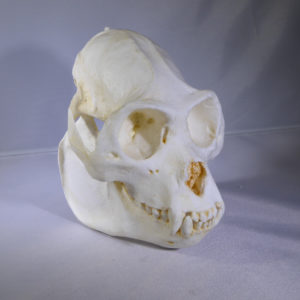
Red-faced Uakari Skull Replica
$122.00
Red-faced uakari skull replica is 3.6 x 2.4 x 2.2 in. Simia melanocephalus skull is a museum-quality polyurethane resin cast of a CAS specimen.
- Description
- Additional information
Description
Red-faced uakari skull replica measures 3.6 x 2.4 x 2.2 inches. Simia melanocephalus skull is museum-quality polyurethane resin cast from California Academy of Sciences specimen. 2-part skull (separate cranium and mandible). 1:1 scale. Made in USA.
Uakari monkeys come from neotropical Amazon flooded or riparian forests. Their geographic range spans across sections of Brazil, Colombia, Peru, and Venezuela.
These monkeys have a highly unusual and striking look. Long, loose hair covers their bodies, but their heads remain completely bald. They have almost no fat under their skin, so their faces look skull-like.
They have the most striking red facial skin of any primate. A bright red face reflects excellent health, and females choose mates based on this color intensity.
Like their closest relatives, they have projecting lower incisors. They travel in the lower tree branches in small groups or large troops of 100. They also climb into the high canopy to forage.
They eat mostly fruit. Unlike other local species, they consume a large amount of unripe fruit. They also eat flowers, seeds, invertebrates, buds and leaves.
Females give birth to a single infant. They only produce one baby every two years, which limits their population.
Scientific Classification
- Kingdom: Animalia
- Phylum: Chordata
- Class: Mammalia
- Order: Primates
- Suborder: Haplorhini
- Infraorder: Simiiformes
- Family: Pitheciidae
- Subfamily: Pitheciinae
- Genus: Cacajao
- Type species: Simia melanocephalus (Humboldt, 1812)
- Conservation status: Vulnerable
Rita, the red-faced uakari skull opened a new scrapbooking store on Rodeo Drive. She knows that women love to scrapbook, socialize and snack on delicious treats. She has hired Julio, the Mexican howler monkey skull replica to create and serve the treats.
Wilma, the white-nosed monkey skull replica, is busy making die-cuts for all the customers to embellish thier pages with.
John Wayne, the western-lowland gorilla male skull replica is ringing up all the customers purchases at the cash register.
Rita is very pleased with her first days’ worth of sales of over 5,000.00!
Additional information
| Weight | 3.2 lbs |
|---|---|
| Dimensions | 3.6 × 2.4 × 2.2 in |
| International Monkey Day - December 14th | International Monkey Day has been created to celebrate monkeys on December 14th, as well as “all things simian,” which includes lemurs, tarsiers, apes, and other non-human primates. It is a great day when it comes to raising awareness about different types of monkeys and primates around the world, as well as the issues they face and how we can help them. |