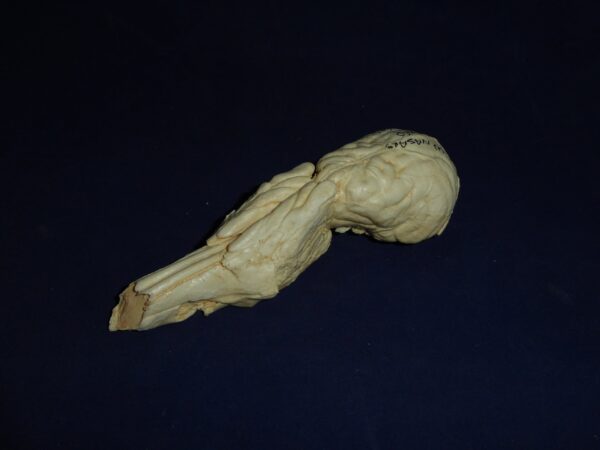

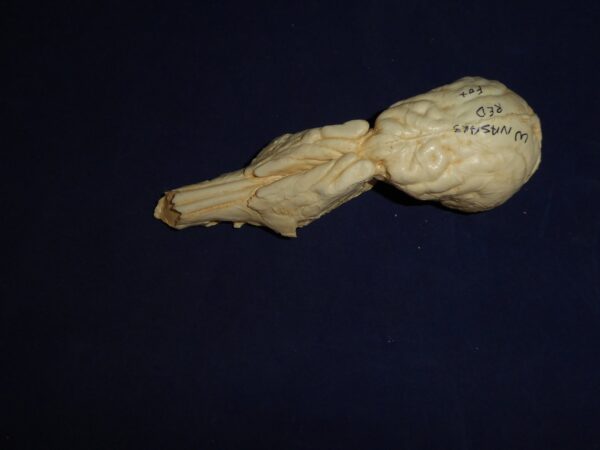


Red Fox Brain and Nasal Replica
$32.00
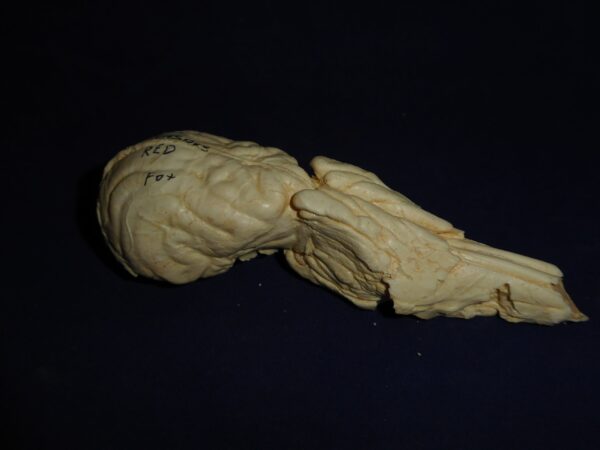
Red fox brain and nasal replica measures 5.6 x 2.3 x 1.8 inches. Vulpes vulpes is museum-quality polyurethane resin cast from CAS specimen. 1:1 scale.
- Description
- Additional information
Description
Red Fox Brain and Nasal Replica for Canid Study
Red fox brain and nasal replica measures 5.6 x 2.3 x 1.8 inches. Vulpes vulpes is museum-quality polyurethane resin cast from CAS specimen. 1:1 scale. Made in USA.
Characteristics of the Red Fox
The Red Fox is the largest species within the genus Vulpes. Its native range spans most of North America and Eurasia. These adaptable carnivores thrive in deep forests, arctic tundra, and open prairies. Apart from its size, Vulpes vulpes is famous for its ability to adapt quickly to new environments. While the name suggests a red coat, they often produce individuals with leucistic or melanistic coloring.
Anatomy and Physical Traits
Red fox skulls are fairly narrow and elongated with small brain cases. Their canine teeth are relatively long compared to other canids. You can distinguish their skulls from dogs by their narrower muzzles and slender teeth. Furthermore, they have an elongated body with relatively short limbs.
Their fluffy tail is longer than half the body length and reaches the ground when they stand. Their pupils are oval and vertically oriented for hunting in low light.
Agile Hunters and Social Life
These animals are very agile and can jump over six-foot fences. They also swim well and possess five digits on their forepaws. Red foxes usually live in pairs or small family groups.
Often, the young stay with their parents to help care for new kits. This species primarily feeds on small rodents, but they also target rabbits, birds, and reptiles. Occasionally, they will even eat fruit and vegetable matter.
Senses and Vocalizations
Nictitating membranes protect their eyes, but these only move when the eyes are closed. They possess an incredibly sharp sense of hearing and can detect low-frequency sounds from great distances. These animals use a wide range of vocalizations to communicate within their family groups. Because they are so agile, they can jump over six-foot fences and swim quite well.
Scientific Classification
- Kingdom: Animalia
- Phylum: Chordata
- Class: Mammalia
- Order: Carnivora
- Family: Canidae
- Genus: Vulpes
- Species: V. vulpes
- Binomial name: Vulpes vulpes (Linnaeus, 1758)
- Conservation status: Least concern (IUCN 3.1)
Curate a Canid Evolution Display
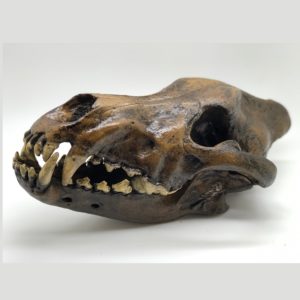
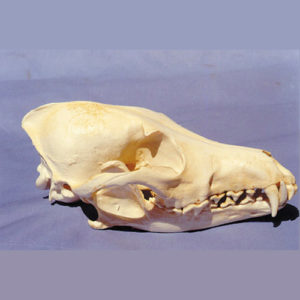
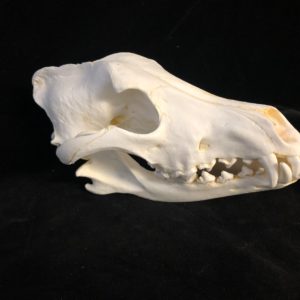
Pairing this red fox brain model with a coyote skull replica and a gray timber wolf skull replica creates a stunning look at North American predators. To really wow a collector, add a dire wolf skull replica from the La Brea Tar Pits. This grouping shows the anatomical shift from the small, clever fox to the massive, extinct hunters of the Pleistocene.
Additional information
| Weight | 4.0 lbs |
|---|---|
| Dimensions | 5.6 × 2.3 × 1.8 in |