

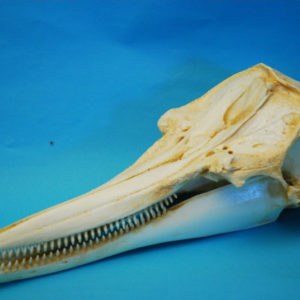
Tucuxi Gray River Dolphin Skull Replica
$393.00
This high-fidelity tucuxi gray river dolphin cranium features a tapered, elongated rostrum and uniform dental alveoli. Native to the Amazon basin, this specimen demonstrates the specialized osteological adaptations of a fluvial cetacean, specifically evolved for navigating complex, silt-heavy freshwater environments and hunting characin fish.
- Description
- Additional information
Description
Tucuxi Gray River dolphin skull replica measures 12.9 inches. Tucuxi gray river dolphin skull replica is museum-quality polyurethane resin cast from California Academy of Sciences specimen. 2-part skull (separate cranium and mandible). 1:1 scale. Made in USA.
The tucuxi gray river dolphin or Sotalia fluviatilis, alternatively known in Peru as bufeo gris or bufeo negro, is a species of freshwater dolphin found in the rivers of the Amazon basin.
Despite being found in geographic locations similar to those of ‘true’ river dolphins such as the boto, the tucuxi is not closely related to them genetically. Instead, it is classed in the oceanic dolphin family Delphinidae.
The tucuxi gray river dolphin physically, the species resembles the bottlenose dolphins, but differs sufficiently to be placed in a separate genus, Sotalia. The tucuxi gray river dolphin is typically 4.9 feet in length. The dolphin is colored light to bluish gray on its back and sides.
The ventral region is much lighter, often pinkish. The dorsal fluke is typically slightly hooked. The beak is well-defined and of moderate length. There are 26 to 36 pairs of teeth in the upper and lower jaws. The tucuxi gray river dolphin has one of the largest known encephalization quotients among mammals.
The tucuxi gray river dolphin exists along much of the length of the Amazon River and many of its tributaries, and is found in Venezuela, Brazil, Peru, Ecuador, southeastern Colombia.
Numerous individuals have been seen in the Orinoco River further north, though it is not clear whether these are tucuxi or costero. The tucuxi gray river dolphin occurs in freshwater habitats only.
The tucuxi gray river dolphins forage in tight groups, often chasing fish in rapid dashes just below the water surface, with fish jumping out of their way. Thirty species of fish are known to be prey, some living in protected lakes and channels, while others occur in fast-flowing rivers.
The tucuxi gray river dolphins have been observed to feed with other river dolphins. They feed on a wide variety of fish. Studies of growth layers suggest the species can live up to 35 years. The oldest known animal was 36 years of age.
Scientific Classification:
- Kingdom: Animalia
- Phylum: Chordata
- Class: Mammalia
- Order: Artiodactyla
- Infraorder: Cetacea
- Family: Delphinidae
- Genus: Sotalia
- Species: S. fluviatilis
- Binomial name: Sotalia fluviatilis (Gervais & Deville, 1853)
- Conservatoin status: Endangered (IUCN 3.1), CITES Appendix
Although this fluvial specimen is strictly freshwater, its cranial morphology offers a stark contrast to the massive, bulbous skull of the Amazon river dolphin, which dominates the same murky river systems.
Additional information
| Weight | 6 lbs |
|---|---|
| Dimensions | 12.9 in |
| National Dolphin Day - April 14th | Each year on April 14th, National Dolphin Day recognizes the social and intelligent mammals of the water. |