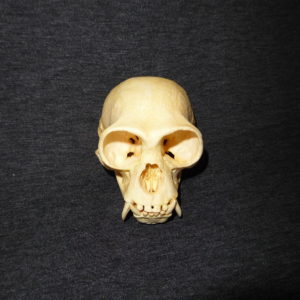
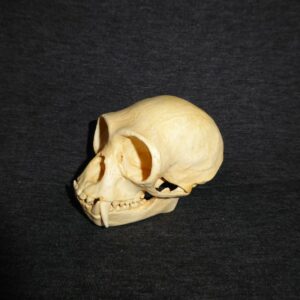
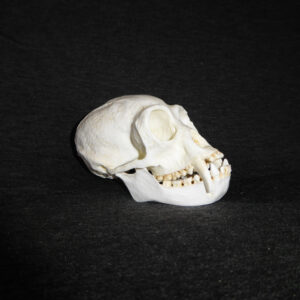
Weeping Capuchin Monkey Skull Replcia
$121.00
Weeping capuchin monkey skull replica is 3.9 x 3.0 x 3.2 in. The Cebus olivaceus skull is a museum-quality polyurethane resin cast of a CAS specimen. 1:1 scale. Made in USA.
- Description
- Additional information
Description
Weeping capuchin monkey skull replica measures 3.9 x 3.0 x 3.2 inches. The Cebus olivaceus skull is a museum-quality polyurethane resin cast from California Academy of Sciences specimen. 2-part skull (separate cranium and mandible). 1:1 scale. Made in USA.
The weeping capuchin comes from South America and is also known as the wedge-capped capuchin. The geographic range includes northern Brazil, Venezuela, and western Guyana.
These monkeys live north of the Orinoco River, south of the Sierra de Perija, and east to the Essequibo River. Dense high-canopy primary forests and dry forests along riverbeds make up their habitat.
Scientific Classification
- Kingdom: Animalia
- Phylum: Chordata
- Class: Mammalia
- Order: Primates
- Suborder: Haplorhini
- Infraorder: Simiiformes
- Family: Cebidae
- Genus: Cebus
- Species: C. olivaceus
- Binomial name: Cebus olivaceus Schomborgk, 1848
- Conservation status: Least Concern
William, the weeping capuchin monkey skull replica, loves to read books about saving elephants. He goes to the library each day and checks out a new book to enjoy in his nest before bed.
Willard, the woolly spider monkey skull replica, is the librarian and looks forward to visiting quietly with him every day.
William, the white-handed gibbon skull replica, recently joined the library and is excited to check his first books out today about saving the rainforests.
Winston, the Western hoolock gibbon replica, is a little wacky and a very nice guy, is doing research on world peace.
They all care deeply about very important world issues. What a great group of guys!
Additional information
| Weight | 4.0 lbs |
|---|---|
| Dimensions | 3.9 × 3.0 × 3.2 in |
| International Monkey Day - December 14th | International Monkey Day has been created to celebrate monkeys on December 14th, as well as “all things simian,” which includes lemurs, tarsiers, apes, and other non-human primates. It is a great day when it comes to raising awareness about different types of monkeys and primates around the world, as well as the issues they face and how we can help them. |