


Ichthyosaur Skeleton Panel Replica
$1,740.00
The demand by collectors led to more intense commercial digging activities. In the early nineteenth century, this resulted in the discovery of more complete skeletons. In 1804, Edward Donovan at St. Donats uncovered a thirteen foot-long ichthyosaur specimen containing a jaw, vertebrae, ribs, and a shoulder girdle.
- Description
- Additional information
Description
Ichthyosaur skeleton panel replica measures 60 inches. Ichthyosaur skeleton plaque is museum-quality polyurethane resin cast from Brigham Young University specimen. 1:1 scale. Made in USA.
Ichthyosaur skeletons, often found in Jurassic marine rocks, exhibit a dolphin-like, convergent evolution structure designed for fully aquatic life, featuring large, deep-diving eyes with protective bony sclerotic rings and limbs adapted into steering paddles.
They ranged from 1 to 26 meters, possessing cone-shaped teeth, a long snout, and a vertebral column designed for powerful, fish-like swimming.
Ichthyosaur Skeleton Panel Features:
- Skull & Eyes: The skull was typically elongated, featuring a long snout, often packed with cone-shaped teeth, and exceptionally large eyes supported by a rigid bony ring called a sclerotic ring.
- Limbs & Flippers: Four limbs were modified into steering paddles (flippers), which often featured a “corncob” structure of many small, disc-like bones and extra phalanges (hyperphalangy).
- Vertebrae & Tail: The backbone consisted of numerous, simple disc-like vertebrae. The tail was vertical (fish-like), with the vertebral column extending into the lower lobe of the tail fin.
- Soft Tissue Evidence: While only bone is typically preserved, some exceptional fossils show a dorsal fin and a large caudal (tail) fin, neither of which were supported by bone.
- Size Variation: Ranged from small (2-meter Ichthyosaurus) to giants like Cymbospondylus (up to 17+ meters).
Common Fossil Findings:
- Viviparity: Many fossils, particularly from Germany (Stenopterygius), show juveniles inside the ribcage, confirming they gave birth to live young (often tail-first).
- Stomach Contents: Some specimens (e.g., found by Mary Anning) contain fish scales and cephalopod hooklets, revealing a diet of fish and squid.
- Injury & Disease: Skeletons sometimes show healed injuries, bite marks from larger predators, or signs of arthritis, indicating a challenging life in Mesozoic oceans.
Famous, complete skeletons have been discovered in Lyme Regis (UK), Holzmaden (Germany), and Rutland (UK), with many dating to the Jurassic period (approx. 180-200 million years ago).
Scientific classification:
- Kingdom: Animalia
- Phylum: Chordata
- Class: Reptilia
- Clade: †Eoichthyosauria
- Order: †Ichthyosauria Blainville, 1835
- Temporal range: Early Triassic – Late Cretaceous (Induan to Turonian)
Related Specimens:
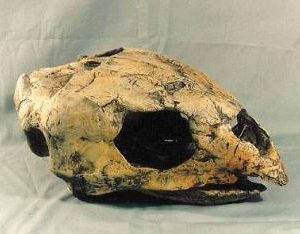
Contrast the high-speed, streamlined morphology of the ichthyosaur with the robust, flipper-integrated architecture of the cretaceous sea turtle skeleton, showcasing the specialized ecomorphological adaptations that defined the apex vertebrates of the Mesozoic oceans.
Additional information
| Weight | 75 lbs |
|---|---|
| Dimensions | 60 in |
You may also like…
-
-

-


Plesiosaurus Skull Replica
Price range: $1,379.00 through $1,579.00Select options This product has multiple variants. The options may be chosen on the product pageQuick View